EN

100kW Hybrid Solar System for a Brick Factory in Uganda
1. Project Overview
Unstable electricity and high diesel costs can significantly increase operating expenses for manufacturing businesses. For brick factories, where production machinery requires a reliable power supply, frequent outages can disrupt operations and reduce profitability.
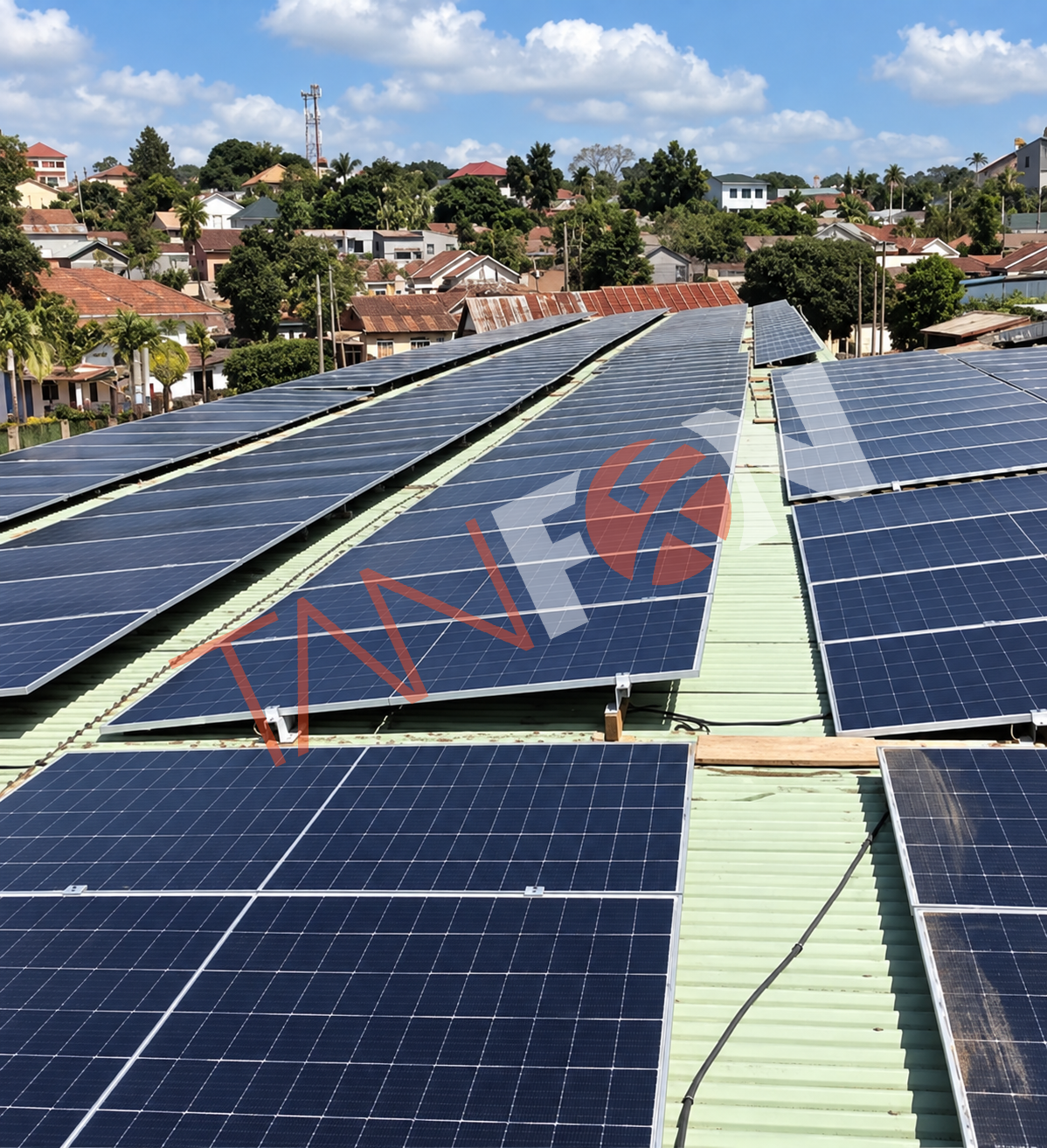
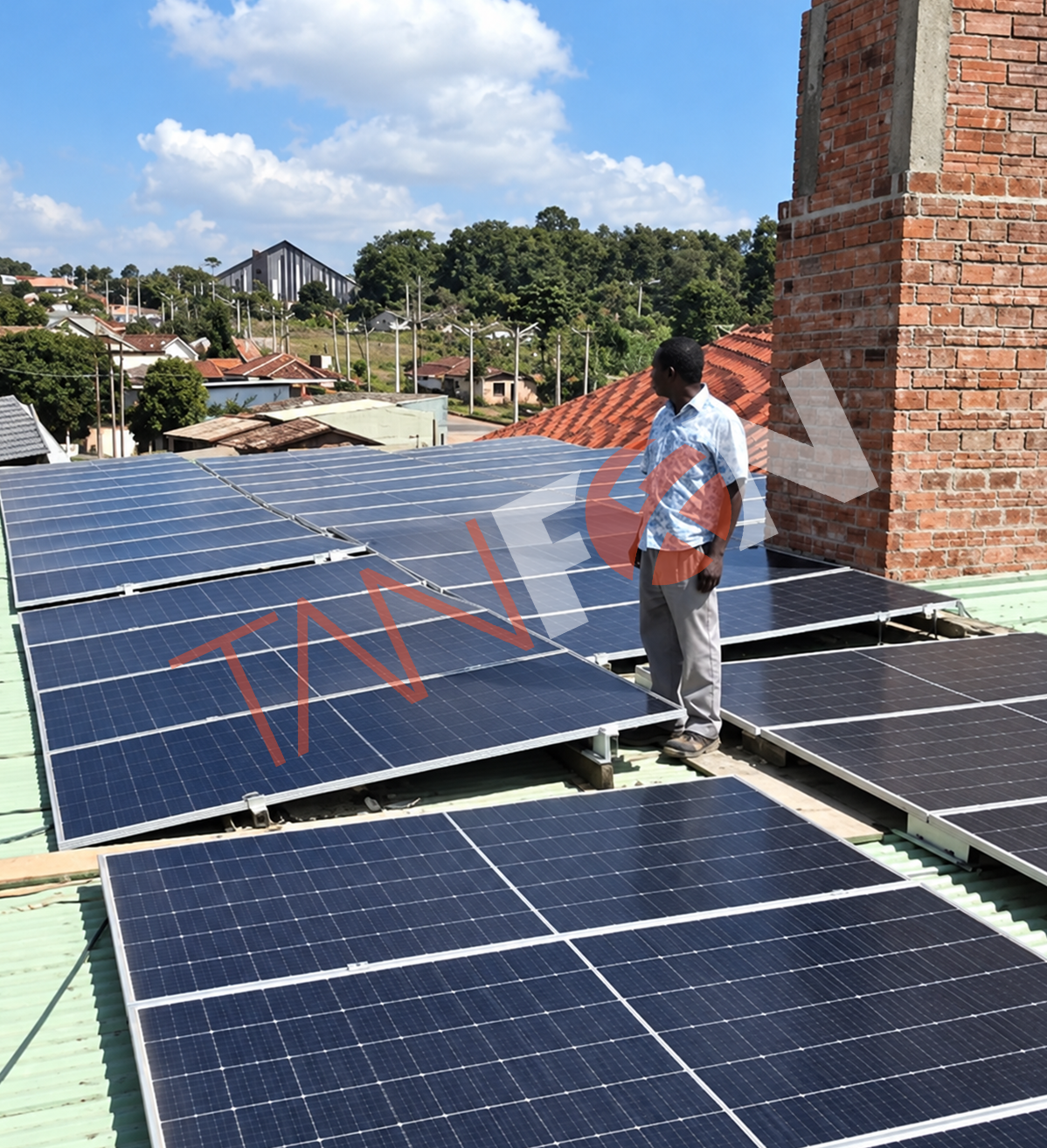
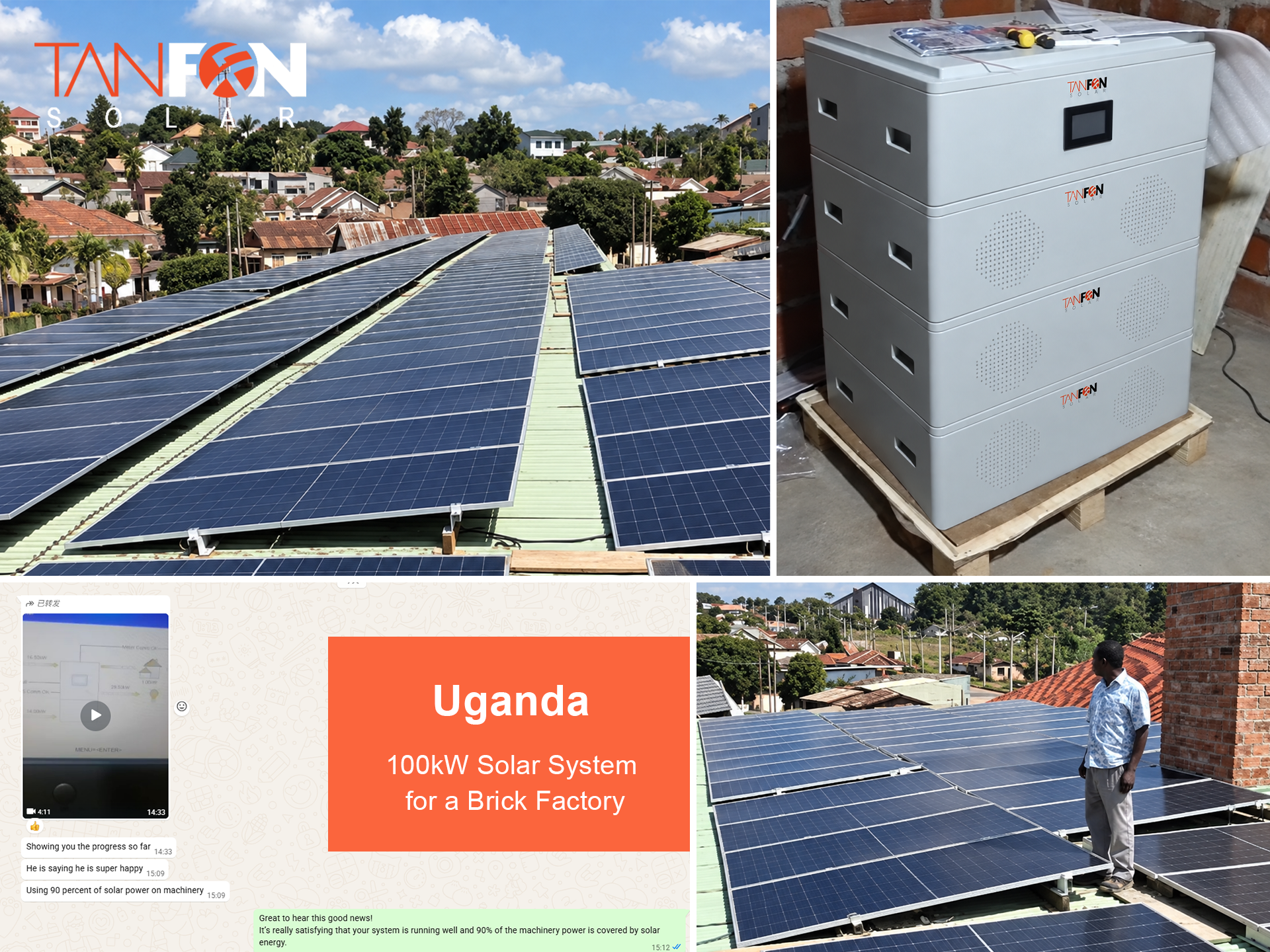
To address these challenges, TANFON supplied a customized 100kW hybrid solar system for a brick factory in Uganda. The solution was designed around the factory's main electrical load: a 37kW motor with high starting-current requirements.
By integrating a 63kVA variable frequency drive (VFD), the system helps control motor startup and provides a more suitable power solution for the factory's operating conditions.
Project Details:
- Location: Uganda
- Application: Brick manufacturing factory
- Solar inverter capacity: 100kW
- Battery capacity: 100kWh
- System type: Hybrid solar power system
- Solar panels: 170 × 625W modules
- Main equipment load: 37kW motor
- Additional equipment: 63kVA variable frequency drive (VFD)
2. Customer Challenge: Unstable Grid Power and High Diesel Costs
The brick factory in Uganda faced two major challenges: unreliable grid electricity and expensive diesel generation.
Frequent power outages made it difficult to maintain stable production, while the cost of running diesel generators placed additional pressure on the factory's operating budget.
The main technical challenge was the factory's 37kW inductive motor. Unlike ordinary resistive loads, an electric motor can draw a substantial surge of current during startup. According to the project information, its instantaneous starting power could reach five to eight times its rated power.
This starting surge could place considerable stress on the power supply if the system were not properly designed.
The customer therefore needed more than a standard solar installation. The solution had to reduce diesel dependence while accommodating the motor's starting requirements.
3. TANFON's 100kW Industrial Solar Solution
TANFON designed a 100kW hybrid solar system with battery storage and a dedicated motor-control solution.
The key design decision was to integrate a 63kVA variable frequency drive (VFD). By controlling the motor's acceleration and startup behavior, the VFD helps reduce starting-current demand and makes the motor load easier to manage.
System Configuration
|
Component |
Specification |
|
Hybrid inverter |
100kW |
|
Inverter model |
S6-EH3P100K-H |
|
Total solar panel capacity |
106.25kWp |
|
Battery storage |
100kWh |
|
Main motor load |
37kW |
|
Variable frequency drive |
63kVA |
|
Application |
Brick manufacturing |
The system combines solar generation, battery storage, and hybrid power management to support the factory's electricity requirements.
During operation, solar energy supplies the factory's connected loads, while the battery and available grid or backup sources support the system according to its configuration and energy availability.
The VFD is particularly important because the motor's startup characteristics must be considered alongside the inverter's output capacity. Proper system sizing and commissioning help ensure that the equipment operates within its electrical limits.
4. Project Results: Solar Supplies 90% of Machinery Electricity
Following installation, the system operated stably, and the customer reported satisfaction with the solution.
According to the project feedback, solar energy supplies approximately 90% of the electricity used by the factory's machinery. This significantly reduces diesel consumption and helps lower production electricity costs.
The main benefits include:
- Lower diesel consumption: Solar energy replaces a substantial portion of electricity previously supplied by diesel generation.
- Reduced operating expenses: Less dependence on diesel helps relieve pressure on the factory's production budget.
- Improved motor operation: The integrated VFD helps manage the 37kW motor's startup requirements.
- Greater energy flexibility: Hybrid power management allows the system to coordinate available solar, battery, and grid electricity.
- More sustainable production: Increased use of solar energy reduces dependence on conventional fuel-based electricity generation.
For a manufacturing business operating with unreliable grid power, these benefits can improve energy cost management while supporting more consistent production.
Actual financial savings depend on diesel consumption before and after installation, solar utilization, operating hours, and local energy prices. The project information does not provide a verified annual savings figure or payback period.
5. Choosing the Right Industrial Solar System
Industrial solar projects require careful consideration of more than the inverter's rated capacity. Motor starting current, production schedules, battery requirements, and the availability of grid or backup power all influence system design.
For businesses evaluating a 100kw industrial solar system, the first step is to identify the factory's main loads and determine whether motors or other equipment require additional startup control.
Battery capacity should also match the required backup duration and load profile. Buyers comparing a 100kw 200kwh industrial solar system kit should confirm whether 200kWh of storage is necessary for their application and ensure that the inverter, battery, and protection equipment are properly matched.
For clarity, the Uganda brick factory featured in this case uses a 100kW hybrid inverter and 100kWh battery, not a 200kWh battery. A 200kWh configuration may be considered for other projects with different energy-storage requirements.
TANFON provides customized industrial and commercial solar solutions based on actual project conditions, helping customers select suitable equipment rather than relying on a standard configuration for every factory.
6. Frequently Asked Questions
How much solar power does the Uganda brick factory use?
According to the project feedback, solar energy supplies approximately 90% of the electricity used by the factory's machinery. The actual percentage may vary with production demand and solar availability.
Why was a VFD installed with the 100kW solar system?
The factory's main load is a 37kW motor with a high startup surge. A 63kVA VFD was included to control motor startup and reduce the impact of the starting load on the power system.
What is the battery capacity of this industrial solar system?
The installed battery capacity is 100kWh. Battery runtime depends on the connected load, usable battery energy, conversion losses, and the operating configuration.
Can a 100kW industrial solar system operate a factory?
It can support suitable factory loads when the inverter, solar array, battery storage, and motor-control equipment are correctly sized. A detailed load assessment is essential, especially when the factory uses large motors or other equipment with high starting currents.
Is industrial commercial energy storage suitable for manufacturing businesses?
Yes. Industrial commercial energy storage can help manufacturing businesses manage solar energy, provide backup power, and reduce reliance on grid electricity or diesel generators. The appropriate configuration depends on production requirements, power quality, and the desired backup duration.
Conclusion
TANFON's 100kW hybrid solar installation for a brick factory in Uganda demonstrates the importance of combining solar generation with application-specific electrical engineering.
By integrating a 63kVA VFD to accommodate the factory's 37kW motor, the solution addresses a key operational challenge while helping reduce diesel dependence. According to customer feedback, solar energy now supplies approximately 90% of the machinery's electricity.
For factories seeking to control energy costs and improve power reliability, TANFON offers customized industrial solar and battery storage solutions designed around real operating requirements.