
 EN
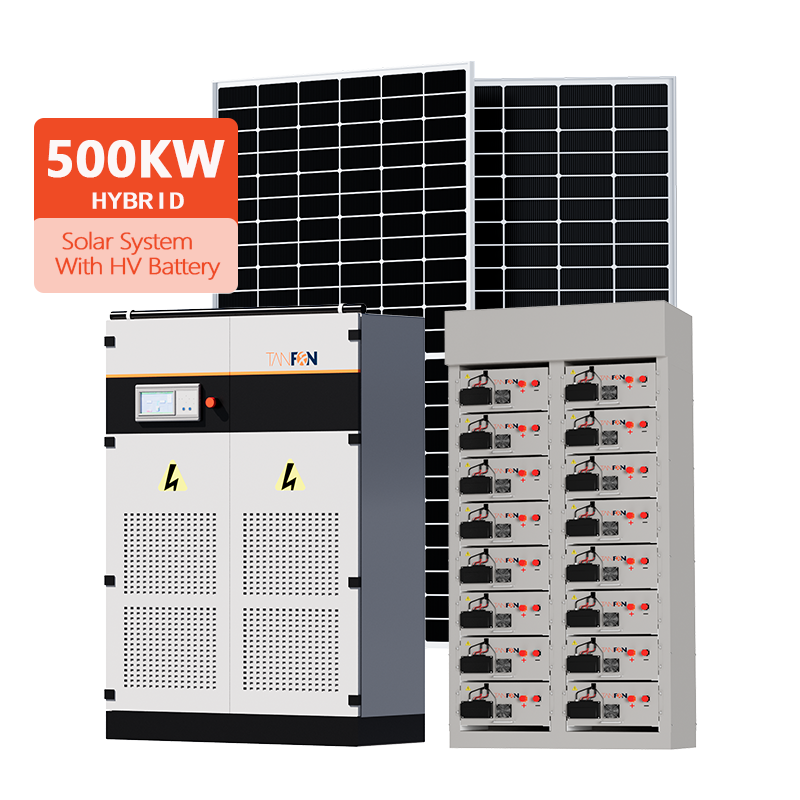
Hospitals have very different energy requirements from factories, hotels, offices, and other commercial buildings. Medical facilities often operate 24 hours a day and depend on a continuous power supply for critical equipment such as life-support systems, diagnostic devices, medical refrigeration, operating-room equipment, and emergency systems.
For this reason, designing hospital solar systems is not simply a matter of installing enough solar panels to offset daytime electricity consumption. A reliable hospital energy solution needs to consider critical loads, battery storage, backup power, weather conditions, electrical infrastructure, and long-term technical support.
With solar PV, battery energy storage, and backup power integrated into a properly engineered system, hospitals can use renewable energy while maintaining the power continuity required for medical operations.
Why Hospitals Have Unique Solar Power Requirements
Healthcare facilities have a different load profile from many other commercial buildings.
A hotel, office, or retail facility may experience significant changes in electricity consumption between daytime and nighttime. Hospitals, however, often maintain a relatively consistent base load because many medical systems must remain operational around the clock.
Typical hospital loads can be divided into two broad categories.
Non-critical loads
These may include:
- Office equipment
- General lighting
- Staff facilities
- Non-essential air conditioning
- Administrative equipment
Critical loads
These may include:
- Life-support equipment
- Diagnostic imaging systems
- Medical refrigerators and cold storage
- Operating-room equipment
- Emergency lighting
- Critical ventilation and HVAC systems
- Medical monitoring equipment
The original article correctly emphasizes that these different loads require different levels of power continuity.
This distinction is important when designing hospital solar systems because the solar PV capacity, battery capacity, inverter rating, and backup generator strategy should be based on the hospital's actual load profile rather than its total connected load alone.
Why Hospital Solar Systems Usually Use a Hybrid Architecture
Solar PV by itself cannot guarantee continuous power availability.
Solar generation naturally varies with:
- Time of day
- Weather
- Seasonal sunlight
- Cloud cover
- Rainfall
- System orientation and shading
For hospitals, these fluctuations need to be managed carefully.
A typical hybrid hospital solar system may combine:
Solar PV + Battery Energy Storage + Grid + Diesel Generator
The solar array supplies daytime energy, while the battery stores surplus electricity for later use. The grid or generator can provide additional backup when solar generation and battery capacity are insufficient.
This layered architecture provides multiple power pathways rather than relying on a single energy source.
The original document describes this approach as a combination of photovoltaic generation, energy storage, and backup power pathways.
For medical facilities, this is particularly important because battery storage is not only used to reduce electricity costs. It can also provide backup power, support load shifting, and improve the continuity of critical loads.
Battery Storage Is a Key Part of Hospital Solar Systems
One of the most important design questions is:
How much battery storage does a hospital actually need?
The answer cannot be determined simply by looking at the solar PV capacity.
Battery sizing should consider:
- Critical-load power demand
- Required backup duration
- Daily energy consumption
- Solar generation profile
- Grid outage frequency
- Generator availability
- Battery depth of discharge
- Inverter efficiency
- Required reserve capacity
- Local weather conditions
For example, a hospital with a relatively small critical load may require a different battery configuration from a larger facility with intensive medical equipment, refrigeration, and HVAC systems.
This is why professional system design should distinguish between power capacity (kW) and energy capacity (kWh).
What Does 300kWh Mean in a Hospital Solar System?
The term 300kWh solar system is sometimes used in online searches, but technically, 300kWh refers to energy storage capacity rather than solar generation power.
A more accurate description would be:
300kWh battery energy storage system
or:
150kW solar system with 300kWh battery storage
For example, a 300kWh battery theoretically stores 300kWh of energy under specified conditions. However, the actual usable energy depends on battery operating parameters, depth of discharge, system efficiency, temperature, reserve requirements, and load conditions.
A 300kWh battery therefore does not automatically mean that a hospital can operate for a specific number of hours.
If the critical load were 50kW, a simplified calculation would be:
50kW × 6 hours = 300kWh
But actual backup duration would be shorter or longer depending on the usable battery capacity and system operating conditions.
This distinction is important for anyone researching a 300kWh solar system or hospital battery storage solution.
150kW Solar Energy Storage for Healthcare Applications
150kW Solar Energy Storage System for Medical Facilities
A 150kW solar system can be configured with varying battery storage capacities to suit the specific energy needs of a facility.
For instance, Tanfon’s current commercial solar portfolio includes a 150kW system equipped with 300kWh of lithium battery storage, deployed at a hospital in Kenya; this demonstrates how a 150kW PV/inverter system can be paired with high-capacity battery storage, although the final configuration must be tailored to the specific project.
Therefore, when clients seek a 150kW solar energy storage solution, the practical engineering considerations should focus on the following:
What specific solar generation capacity and battery storage capacity does the hospital require?
These are two separate capacity planning decisions.
Real-World Experience: 150kW Solar Project for a Hospital in Kenya
Real project experience is particularly valuable when designing solar systems for critical infrastructure.
According to the project experience documented in the original article, Tanfon implemented a 150kW solar project for a hospital in Kenya. The project highlighted an important engineering challenge: annual average solar irradiation does not necessarily represent the conditions that the system will experience during the most difficult operating periods.
During the rainy season, extended periods of cloudy weather can significantly reduce PV generation.
This means that simply using annual average sunshine data to size a hospital solar system may not provide sufficient energy reserves during low-solar periods.
For hospital projects, engineers therefore need to examine:
- Seasonal solar irradiation
- Rainy-season conditions
- Daily load curves
- Critical and non-critical loads
- Battery charging opportunities
- Backup generator availability
- Required reserve capacity
This project experience demonstrates why hospital solar systems should be designed around the worst relevant operating conditions rather than average conditions alone.
Why Site Assessment Matters for Hospital Solar Projects
The quality of the solar equipment is only one part of system reliability.
The initial site survey and engineering design can have an equally significant impact on the final system performance.
Before designing a hospital solar system, engineers should assess:
1. Electricity consumption
The hospital's daily and peak demand should be analyzed rather than relying only on the total connected load.
2. Critical loads
Medical equipment that cannot tolerate interruptions should be identified separately.
3. Roof structure
If rooftop solar is planned, engineers need to verify:
- Structural strength
- Available roof area
- Roof condition
- Mounting options
- Shading
- Wind conditions
4. Existing electrical infrastructure
The existing distribution system should be reviewed to determine how the solar inverter, battery system, grid, and generator will be integrated.
5. Local climate
Weather conditions are especially important when sizing battery storage.
The source document specifically highlights roof structure, usable installation area, shading, local weather patterns, and existing electrical infrastructure as important engineering considerations.
Inverter Selection for Hospital Solar Systems
Hospitals can have complex three-phase electrical loads.
Different medical devices may start and stop independently, creating changes in phase loading and short-term variations in power demand.
Therefore, inverter selection should consider more than the nominal kW rating.
Engineers should evaluate:
- Three-phase load characteristics
- Phase imbalance
- Peak loads
- Motor starting currents
- Overload capability
- Generator compatibility
- Grid characteristics
- Battery charging and discharging requirements
- EMS functionality
Tanfon's commercial solar hardware is described in the source material as using industrial-grade control logic and high-protection inverters with built-in transformers to address three-phase load imbalance and variable equipment operation.
For hospital applications, these engineering considerations can be particularly important because the system may need to operate alongside many different types of electrical equipment.
Remote Monitoring Is Important for Medical Solar Systems
A solar system installed at a hospital should not simply be left to operate without supervision.
Remote monitoring allows engineers to track system conditions such as:
- PV generation
- Battery status
- Inverter performance
- Charging and discharging
- Load consumption
- Fault alarms
- Abnormal operating conditions
Early detection of abnormal operating conditions can help reduce the risk of unexpected system interruptions.
The original article specifically emphasizes IoT-based remote monitoring and early fault detection as part of the reliability strategy for medical solar systems.
For hospitals in remote areas, this becomes even more valuable because immediate access to qualified local technicians may not always be available.
Long-Term Service Is Part of Hospital Solar System Reliability
For healthcare facilities, solar system reliability does not end when installation is completed.
A complete service framework should include:
- Remote diagnostics
- Fault monitoring
- Preventive maintenance
- Technical troubleshooting
- Spare parts support
- Defined escalation procedures
- On-site service when required
Hospitals cannot always wait several days for a technician to diagnose a system problem.
The source document therefore emphasizes remote diagnostics, clear fault escalation procedures, and defined on-site response times as important elements of a healthcare solar solution.
Tanfon states that its commercial clients can receive 24/7 remote diagnostics and a 72-hour on-site response service. This is a company service claim rather than an independently verified performance guarantee, so it is best presented as a service capability rather than as a universal response outcome.
How to Evaluate a Hospital Solar System
Hospitals should not compare solar proposals based only on the number of solar panels or the system's total kW rating.
A more complete evaluation should consider:
|
Evaluation Area |
What to Check |
|
PV capacity |
Is the solar generation capacity matched to the load? |
|
Battery capacity |
Is the kWh capacity sufficient for the required backup period? |
|
Critical loads |
Are essential medical loads clearly identified? |
|
Inverter |
Does it support the hospital's three-phase load profile? |
|
Backup power |
How does the system interact with the grid and generator? |
|
Site engineering |
Has the roof and electrical infrastructure been assessed? |
|
EMS |
Can energy sources be managed intelligently? |
|
Monitoring |
Can system performance be monitored remotely? |
|
O&M |
What happens after installation? |
|
Technical support |
What response and escalation procedures are available? |
This approach helps hospital administrators evaluate the complete energy solution, rather than focusing only on the initial equipment price.
Hospital Solar Systems Should Be Designed for Real Operating Conditions
Solar energy can provide meaningful benefits for hospitals, but it should be integrated into a broader energy architecture rather than treated as the hospital's only source of electricity.
A properly engineered hospital solar system should consider:
Load Analysis → PV Sizing → Battery Sizing → Inverter Selection → Backup Integration → Site Engineering → Monitoring → Long-Term Service
The original document reaches the same fundamental conclusion: reliable hospital solar operation depends on comprehensive load assessment, hybrid system design, site engineering, and long-term technical support.
For hospitals operating in areas with unreliable grids, the objective is not simply to install more solar panels. The goal is to create an energy system that can intelligently coordinate solar generation, battery storage, grid power, and backup generation according to the facility's actual operating requirements.
Conclusion
Hospital solar systems require a different design approach from conventional commercial solar projects.
Because hospitals operate critical equipment around the clock, system designers need to pay close attention to load classification, battery capacity, inverter performance, seasonal weather conditions, electrical integration, and long-term service.
A 150kW solar system with 300kWh battery storage, for example, may be suitable for one medium-scale facility but inappropriate for another. The correct configuration depends on the hospital's actual load profile, critical-load requirements, local solar resource, outage conditions, and required backup duration.
For this reason, terms such as 150kW solar energy storage and 300kWh solar system should ultimately be translated into a more precise engineering question:
How much PV power, battery energy storage, and backup capacity does this specific hospital actually require?
That is the foundation of a reliable and professionally engineered hospital solar solution.
Table of Contents
- Why Hospitals Have Unique Solar Power Requirements
- Why Hospital Solar Systems Usually Use a Hybrid Architecture
- Battery Storage Is a Key Part of Hospital Solar Systems
- What Does 300kWh Mean in a Hospital Solar System?
- 150kW Solar Energy Storage for Healthcare Applications
- Real-World Experience: 150kW Solar Project for a Hospital in Kenya
- Why Site Assessment Matters for Hospital Solar Projects
- Inverter Selection for Hospital Solar Systems
- Remote Monitoring Is Important for Medical Solar Systems
- Long-Term Service Is Part of Hospital Solar System Reliability
- How to Evaluate a Hospital Solar System
- Hospital Solar Systems Should Be Designed for Real Operating Conditions
- Conclusion
