
 EN
EN
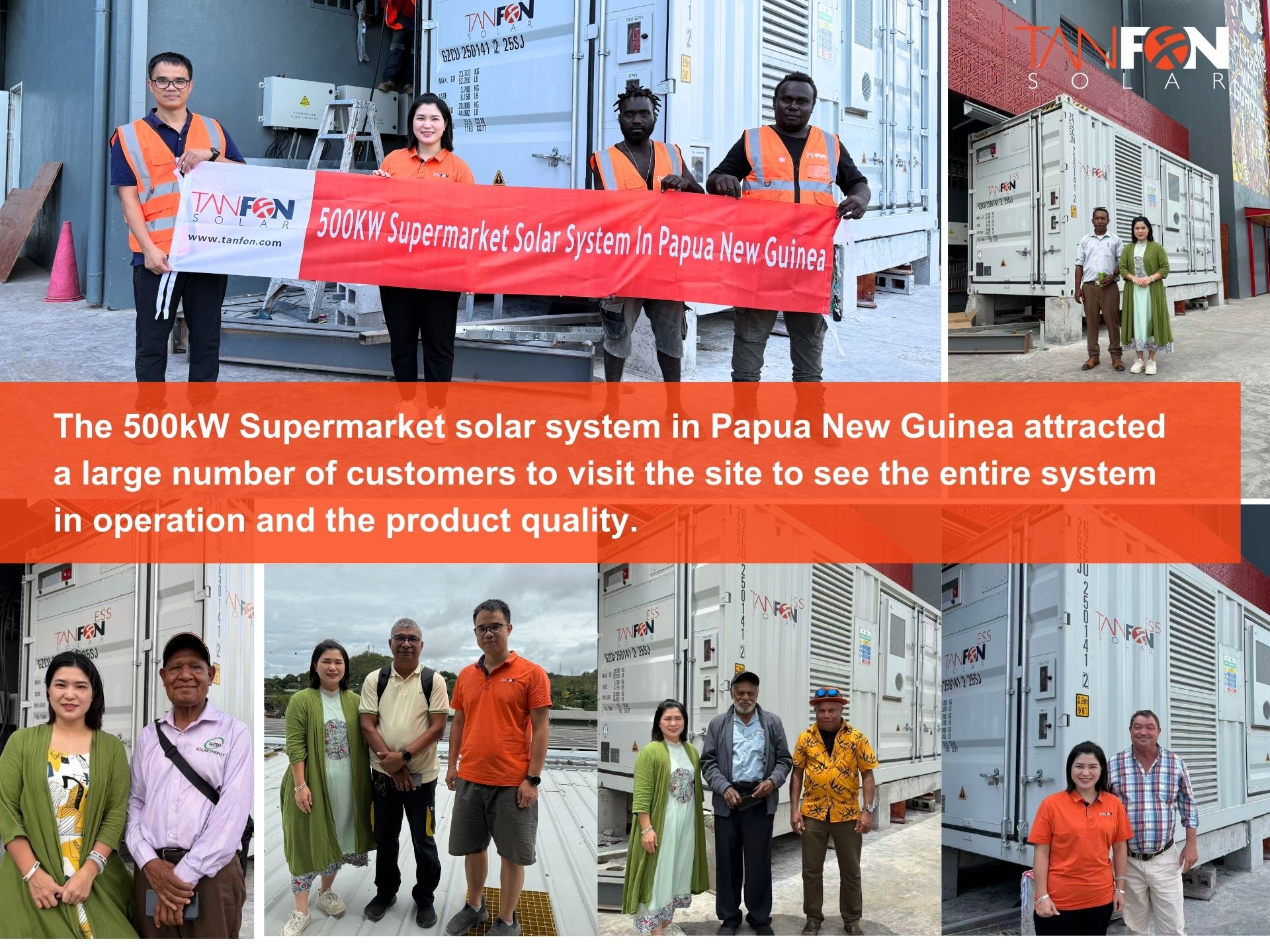
Reliable electricity is a foundation of community development.
Public facilities, schools, medical centers, small businesses, communication systems, water supply infrastructure, and households all depend on stable access to electricity. However, many communities still face challenges such as limited grid coverage, unstable power supply, high fuel costs, or difficult geographical conditions.
In these environments, solar energy provides an increasingly practical way to generate electricity locally.
However, a successful community power project requires more than simply installing photovoltaic panels. The system must be designed around the community's actual electricity demand, operating conditions, available resources, and future development plans.
A properly engineered solar energy solution can combine photovoltaic generation, battery storage, intelligent energy management, and backup power to create a more flexible and reliable electricity supply.
At Tanfon Solar Energy Systems, we focus on designing integrated solar and battery storage systems for different application environments, helping communities improve energy access while reducing dependence on conventional power sources.
How Solar Energy Is Changing Community Electricity Solutions
Traditional electricity infrastructure can be difficult and expensive to extend to remote or rapidly developing communities.
In some locations, grid expansion may require significant investment in transmission lines, transformers, and other infrastructure. In remote villages or island regions, extending the conventional grid may be technically challenging or economically impractical.
Solar power offers a different approach.
Instead of relying entirely on electricity generated far away, communities can generate part or all of their electricity locally.
Photovoltaic (PV) modules convert sunlight into electricity during the day. When combined with battery storage, excess solar generation can be stored and used later when solar production is unavailable.
The basic operating model is:
Solar Generation → Local Loads → Battery Storage → Backup Power
This architecture allows electricity generation and consumption to be managed locally.
For communities with unstable grid connections, solar and battery storage can also work together with the existing utility supply rather than completely replacing it.
This flexibility is one of the key advantages of a modern solar energy solution.
What Can Solar Power Support in a Community?
Community energy requirements vary significantly depending on the location and type of infrastructure involved.
A solar power system may support:
- Schools and educational facilities
- Community centers
- Medical clinics
- Small businesses
- Public buildings
- Communication equipment
- Water pumping systems
- Street lighting
- Refrigeration
- Residential electricity demand
For example, a community center may require electricity for lighting, communication equipment, computers, refrigeration, and water systems.
A rural medical facility may have additional requirements for medical equipment and temperature-controlled storage.
A small commercial community may require electricity for refrigeration, machinery, lighting, and business operations.
Because these loads have different operating characteristics, the system should be designed around actual electricity consumption rather than using a standardized configuration.
Why Battery Energy Storage Is Important for Community Solar Systems
Solar PV generation naturally varies throughout the day.
Solar production is highest when sunlight is available and falls to zero after sunset. Community electricity demand, however, does not stop when the sun goes down.
This is where battery storage becomes important.
A Battery Energy Storage System (BESS) stores electricity generated during periods of high solar production and makes that energy available later.
For example:
During the Day
Solar PV supplies the community's active electrical loads.
If solar generation exceeds immediate consumption, surplus electricity can charge the battery.
In the Evening
Solar production decreases, while household and community electricity demand may remain high.
The battery can discharge to support the required loads.
During Temporary Grid Outages
Where backup functionality is included in the system design, the battery can supply designated critical loads during grid interruptions.
This makes solar-plus-storage systems particularly valuable for communities where electricity reliability is a major concern.
Is a 100kWh Battery Energy Storage System Suitable for a Community?
A 100kWh battery energy storage system can be an appropriate configuration for certain community applications, but battery capacity should never be selected based solely on a standard number.
The actual requirement depends on several factors:
- Daily electricity consumption
- Peak load
- Critical load requirements
- Required backup duration
- Solar PV capacity
- Grid availability
- Nighttime electricity consumption
- Seasonal demand
- Future expansion plans
For example, a community with relatively moderate electricity demand and a well-sized solar array may use a 100kWh battery to shift excess daytime solar generation into evening hours.
Another community with significantly higher demand may require a much larger battery capacity.
Therefore, 100kWh battery energy storage system should be viewed as one possible system configuration rather than a universal solution.
The correct approach is to calculate the battery requirement based on the community's actual load profile and backup objectives.
Designing the Right Solar Energy Solution for Different Communities
No two communities have exactly the same energy requirements.
A rural village, an island community, an industrial park, and a public-service center can have completely different electricity consumption patterns.
For this reason, professional system design should begin with a detailed energy assessment.
Engineers typically evaluate:
- Daily electricity consumption
- Peak demand
- Load distribution throughout the day
- Seasonal changes
- Local solar resources
- Available installation space
- Critical electrical loads
- Grid conditions
- Battery requirements
- Future development plans
This information helps determine the appropriate combination of:
PV Capacity + Battery Capacity + Inverter Capacity + Energy Management
The goal is to create a system that can provide sufficient energy without unnecessarily increasing the initial investment.
Why Load Analysis Matters
One of the most important steps in designing a community solar system is understanding how electricity is actually consumed.
Electricity demand may increase during:
- Morning activities
- School operating hours
- Business hours
- Evening household activities
- Community events
- Seasonal periods
If engineers only calculate the total amount of electricity consumed each day, they may overlook important differences in when that electricity is required.
For example, a community may have relatively low daytime demand but significantly higher consumption in the evening.
In that case, simply increasing PV capacity may not solve the problem.
Battery storage may provide greater value by allowing daytime solar energy to be shifted into evening hours.
This is why energy consumption patterns are just as important as total daily electricity consumption.
Hybrid Solar Systems for Communities With Unstable Grids
Not every community needs to operate completely off-grid.
In many areas, a hybrid system can provide a more practical solution.
A hybrid solar system can integrate:
- Solar PV
- Battery storage
- Utility grid
- Diesel generator or other backup sources
The system can automatically coordinate these energy sources according to configured operating conditions.
For example, solar power may supply the majority of daytime loads, while excess generation charges the battery.
When solar production decreases, stored energy can support the loads.
If battery capacity becomes insufficient or the grid becomes available, the system can use the appropriate backup source according to the energy management strategy.
This type of architecture gives communities greater flexibility without requiring the complete removal of existing power infrastructure.
Practical Experience in Community Energy Projects
One of the most important challenges in community renewable energy projects is balancing electricity generation with actual demand.
Community electricity consumption changes throughout the day and can also vary significantly between seasons.
A system that is too small may fail to provide adequate power during critical periods.
A system that is significantly oversized may increase the initial investment without achieving proportional benefits.
Successful projects therefore begin with an accurate understanding of the community's energy requirements.
Engineers need to determine:
- What loads need electricity?
- How much power do they consume?
- When do they operate?
- Which loads are critical?
- How long must backup power be available?
- How much solar energy can be consumed directly?
- How much energy should be stored?
This application-based approach allows the system to be designed around real operating conditions rather than assumptions.
Building Sustainable Communities Through Solar Technology
Solar energy can contribute to community development in several ways.
First, local renewable generation can reduce dependence on conventional electricity sources.
Second, battery storage can improve energy availability beyond daylight hours.
Third, intelligent energy management can help communities make more efficient use of available electricity.
Finally, modular solar and storage systems can provide opportunities for future expansion as electricity demand increases.
A modern solar energy solution should therefore be viewed as more than a power-generation system.
It is part of a broader energy infrastructure that connects:
Generation → Storage → Distribution → Consumption → Energy Management
This integrated approach can help communities establish a more flexible and resilient electricity system.
Why Choose Tanfon Solar Energy Systems?
At Tanfon Solar Energy Systems, we believe that community solar projects should be designed around practical energy requirements rather than standardized equipment packages.
Our engineering approach considers the local environment, electricity demand, available solar resources, battery requirements, inverter configuration, and future development plans before determining the final system architecture.
Our solutions can integrate:
- Solar PV modules
- LiFePO₄ battery storage
- Hybrid inverters
- Battery Management Systems (BMS)
- Energy Management Systems (EMS)
- Remote monitoring
- Grid integration
- Backup generators
This integrated architecture allows different energy sources to work together as one coordinated system.
Whether a project requires a small community solar system, a 100kWh battery energy storage system, or a larger solar-plus-storage configuration, the final solution should always be determined by the project's actual electricity requirements.
The objective is not simply to install equipment.
The objective is to build an energy system that works reliably for the community it serves.
The Future of Community Energy
As communities continue to develop, their electricity requirements will also evolve.
Schools may add new classrooms.
Medical centers may install additional equipment.
Businesses may expand their operations.
Water systems may require additional pumping capacity.
Residential electricity consumption may increase.
A well-designed solar energy system should therefore consider not only today's requirements but also future energy demand.
Modular PV and battery storage systems can provide greater flexibility for future expansion, allowing additional capacity to be considered as electricity requirements grow.
This makes solar and battery storage increasingly relevant to communities seeking a more sustainable and resilient energy infrastructure.
Conclusion
Solar energy can play an important role in improving electricity access and reliability for communities around the world.
However, successful community power projects require more than photovoltaic generation alone.
The most effective systems combine solar PV, battery energy storage, intelligent energy management, and appropriate backup power according to the community's actual requirements.
A 100kWh battery energy storage system may be suitable for some smaller community applications, while larger or more energy-intensive projects may require significantly greater storage capacity.
The right configuration should always be determined through professional load analysis and site assessment.
For communities facing unreliable grids, limited infrastructure, or rising energy costs, a properly engineered solar energy solution can provide a practical pathway toward greater energy independence and long-term energy resilience.
With customized engineering and integrated system design, Tanfon Solar Energy Systems helps customers develop solar and battery storage solutions that are designed around real-world energy needs rather than one-size-fits-all assumptions.
The future of community electricity is not simply about generating more power. It is about generating, storing, and managing energy more intelligently.
FAQ
Can solar systems provide reliable electricity for communities?
Yes. Solar PV can generate electricity locally, while battery storage can provide energy after sunset and, when properly configured, support critical loads during power interruptions.
What is a 100kWh battery energy storage system?
A 100kWh battery energy storage system can store up to approximately 100kWh of energy under its rated conditions. Its actual usable energy and backup duration depend on the battery configuration, operating limits, inverter efficiency, and connected load.
Is a 100kWh BESS enough for a village?
It depends on the village's electricity consumption and critical loads. A detailed load assessment is required to determine whether 100kWh provides sufficient energy for the required backup period.
What is the best solar energy solution for an off-grid community?
An off-grid community will typically require a combination of solar PV, battery storage, appropriate inverter capacity, and backup power if needed. The system should be designed according to local solar resources and the community's daily and seasonal electricity demand.
Why should communities combine solar power with battery storage?
Battery storage allows excess daytime solar generation to be used later, particularly during evening hours or periods when solar generation is unavailable. This improves the flexibility and reliability of the overall energy system.
Table of Contents
- How Solar Energy Is Changing Community Electricity Solutions
- What Can Solar Power Support in a Community?
- Why Battery Energy Storage Is Important for Community Solar Systems
- Is a 100kWh Battery Energy Storage System Suitable for a Community?
- Designing the Right Solar Energy Solution for Different Communities
- Why Load Analysis Matters
- Hybrid Solar Systems for Communities With Unstable Grids
- Practical Experience in Community Energy Projects
- Building Sustainable Communities Through Solar Technology
- Why Choose Tanfon Solar Energy Systems?
- The Future of Community Energy
- Conclusion
- FAQ
