
 EN
EN
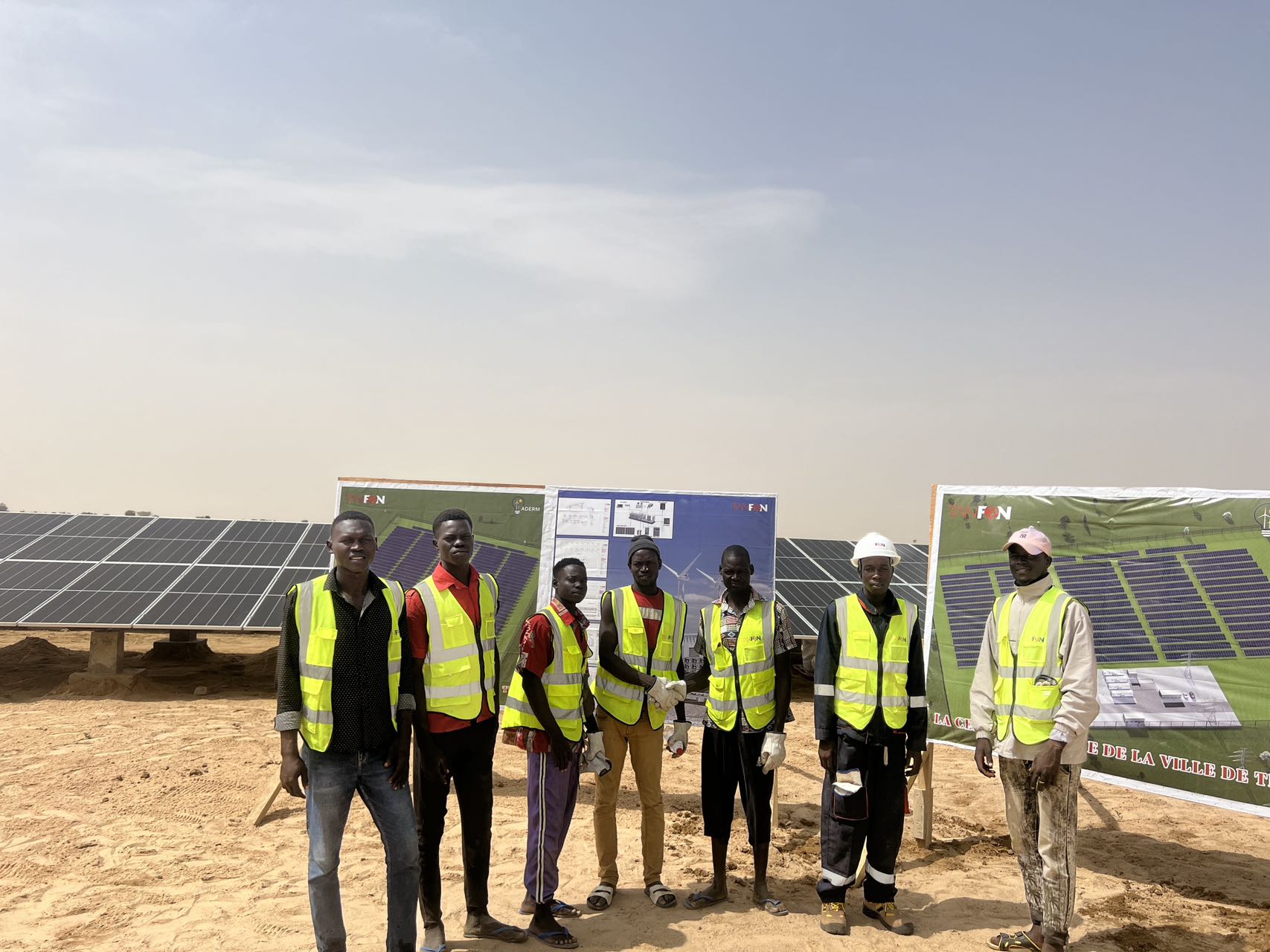
How Can Factories Use Solar Energy to Reduce Electricity Costs?
For many factories, electricity is one of the most significant operating expenses. Manufacturing equipment, HVAC systems, compressors, pumps, refrigeration, lighting, and other industrial loads can consume substantial amounts of electricity every day.
As electricity prices rise and grid reliability remains a concern in many markets, factory owners are looking for practical ways to reduce energy costs without compromising production continuity.
Solar energy has become an increasingly attractive option.
However, an industrial solar project is about much more than installing photovoltaic panels on a factory roof. The most effective solution combines solar generation, battery storage, intelligent energy management, and the existing electrical infrastructure into one coordinated system.
Based on our experience with commercial and industrial energy projects, factory managers are increasingly looking for energy solutions designed around their actual production schedules, electricity consumption, grid conditions, and future expansion plans. This is why integrated solar and battery systems are becoming increasingly important for modern manufacturing facilities.
Why Are More Factories Choosing Solar Energy Systems?
Factories typically have high and relatively predictable electricity demand during production hours.
A manufacturing facility may operate multiple production lines, motors, compressors, pumps, HVAC systems, refrigeration units, and other equipment simultaneously. When these loads operate during daylight hours, solar PV generation can directly offset part of the electricity purchased from the grid.
This creates a straightforward opportunity to reduce electricity costs.
A well-designed factory solar system can:
- Generate electricity on-site
- Reduce dependence on grid electricity
- Lower daytime electricity purchases
- Improve energy-use flexibility
- Reduce reliance on diesel generators where applicable
- Provide additional energy security when combined with battery storage
However, the amount of value a factory receives from solar depends heavily on how well the system matches the facility's actual electricity consumption.
For example, a factory with heavy daytime production may be able to consume a large proportion of its solar generation directly. Another facility with significant nighttime operations may benefit more from combining PV generation with battery storage.
The objective is therefore not simply to install as many solar panels as possible.
The objective is to generate, store, and use electricity in the most effective way for the factory's operating profile.
How Solar Energy Systems Help Factories Manage Energy Costs
The basic operating principle of a factory solar system is simple.
During periods of sunlight, photovoltaic modules generate electricity. That electricity can be used directly by the factory's electrical loads.
If solar generation exceeds the factory's immediate demand, the surplus electricity can either be exported to the grid where local regulations and utility policies allow it, or stored in a Battery Energy Storage System (BESS) for later use.
This becomes particularly valuable for factories with long operating hours.
For example, a manufacturing facility may have high electricity consumption throughout the daytime production period. Solar generation can supply part of this load directly, reducing the amount of electricity purchased from the utility.
When battery storage is integrated, surplus solar energy can be stored and discharged later when demand remains high but solar generation has declined.
This creates a more flexible energy model:
Solar PV → Factory Loads → Battery Storage → Grid / Backup Power
A properly configured industrial commercial energy storage system can therefore complement solar generation by addressing the timing difference between when electricity is produced and when the factory actually needs it.
Why Battery Storage Matters for Industrial Facilities
Solar PV and battery storage serve different functions.
Solar panels generate electricity.
Battery storage allows that electricity to be used at a different time.
This distinction is important for industrial facilities because electricity demand does not always perfectly match solar production.
For example, a factory may have substantial electricity consumption during the late afternoon or evening, while solar generation naturally decreases as the sun sets.
Without battery storage, surplus solar generation may not always be fully utilized.
With a BESS, excess solar electricity can be stored and discharged later according to the system's operating strategy.
An industrial commercial energy storage system can also provide additional flexibility during grid instability, depending on the system architecture and the loads selected for backup.
Potential functions include:
- Solar energy storage
- Backup power for critical loads
- Peak-load support
- Energy shifting
- Diesel generator coordination
- Grid and solar power management
This is particularly relevant for factories operating in areas where grid outages or unstable electricity supply can interrupt production.
The Importance of Specialized Solar Design for Industrial Applications
Not every factory needs the same size solar energy system.
System capacity should never be determined simply by the size of the building or the number of available roof panels.
Instead, engineers should evaluate the factory's actual energy profile.
Key factors include:
- Average daily electricity consumption
- Peak electrical demand
- Production hours
- Equipment operating schedules
- Daytime and nighttime energy consumption
- Available roof or ground-mount area
- Local solar resource
- Grid reliability
- Battery backup requirements
- Future production expansion
This engineering assessment helps determine the appropriate balance between PV capacity, inverter capacity, battery storage, and backup power.
The objective is to avoid both under-sizing and unnecessary oversizing.
An undersized system may fail to provide the expected energy savings.
An unnecessarily oversized system, meanwhile, can increase the initial investment without delivering proportional additional value.
Professional system design therefore focuses on the relationship between energy generation, energy consumption, storage capacity, and business requirements.
200kW vs. 250kW Solar Energy System: Which Is Better for a Factory?
When researching commercial and industrial solar systems, factory owners often encounter system sizes such as 200kW and 250kW.
However, the larger system is not automatically the better choice.
A 200kW solar energy system may be appropriate for a facility with substantial daytime electricity consumption and a load profile that closely matches expected solar generation.
A 250kW solar energy system may be considered when the factory has higher energy demand, sufficient installation space, or plans to increase production in the future.
The final decision should consider:
|
Factor |
200kW Solar Energy System |
250kW Solar Energy System |
|
PV capacity |
200kW |
250kW |
|
Potential daily generation |
Lower |
Higher |
|
Suitable load |
Moderate-to-high |
High |
|
Roof/ground area required |
Lower |
Higher |
|
Future expansion potential |
Moderate |
Higher |
|
Initial investment |
Generally lower |
Generally higher |
These figures should be treated as reference system capacities rather than universal recommendations.
For example, a factory with a 200kW solar energy system may achieve excellent solar self-consumption if most of its electricity demand occurs during daylight hours.
Another factory may benefit more from a 250kW solar energy system if its electricity consumption is higher or if future production expansion is expected.
In both cases, the correct system size should be determined through a professional load assessment.
Solar Capacity Should Be Based on Load, Not Factory Size
A common mistake in industrial solar planning is to assume that a larger factory automatically requires a larger PV system.
In reality, two factories of similar physical size can have completely different energy requirements.
Consider two examples.
A warehouse may occupy a large area but have relatively low electricity consumption.
A manufacturing plant occupying a smaller area may operate high-power motors, compressors, refrigeration equipment, and production machinery throughout the day.
The second facility may require substantially more solar generation despite having a smaller building.
This is why professional engineers analyze the electrical load profile, rather than using building size as the primary sizing criterion.
The key questions are:
- How much electricity does the factory consume each day?
- What is the maximum power demand?
- When does the factory consume the most electricity?
- Which equipment must remain operational during a grid outage?
- How much solar energy can be consumed directly?
- How much energy should be stored?
- Will electricity demand increase in the future?
The answers determine whether a 200kW, 250kW, or another system capacity is appropriate.
How Industrial Commercial Energy Storage Improves Energy Management
For factories with significant electricity consumption, battery storage can become an important component of the overall energy strategy.
A properly configured industrial commercial energy storage system can store electricity when it is available and discharge it when additional power is required.
For example:
During Peak Solar Production
Solar PV supplies the factory's active electrical loads.
If generation exceeds immediate demand, the excess electricity can charge the battery.
During High-Demand Periods
The battery can discharge according to the programmed energy management strategy and support the factory load.
During Grid Instability
Where the system is designed for backup operation, battery storage can support designated critical loads during grid interruptions.
During Low-Solar Periods
Stored energy can help extend the useful contribution of solar power beyond daylight hours.
This coordinated approach gives factory owners greater control over when electricity is generated, stored, and consumed.
Load Analysis Should Come Before Equipment Selection
One of the most important lessons from industrial energy projects is that factory electricity demand is rarely static.
Some factories operate primarily during standard daytime shifts.
Others operate multiple shifts and continue production into the evening.
Some facilities have relatively stable loads, while others experience significant fluctuations as different stages of the production process start and stop.
For this reason, system design should begin with a detailed load analysis.
Engineers need to understand:
What equipment is operating?
When is it operating?
How much power does it require?
Which loads are critical?
What happens when the grid fails?
The engineering team can then determine the appropriate combination of:
- PV capacity
- Inverter capacity
- Battery capacity
- Backup power
- Energy management controls
The original project approach in your document correctly emphasizes analyzing equipment operating hours, peak power demand, and backup requirements before selecting the system configuration.
That point should remain one of the central messages of the article because it demonstrates genuine engineering expertise.
Solar Plus Battery Storage: A More Flexible Industrial Energy Model
For many factories, solar PV alone may not provide the level of energy flexibility they require.
The combination of solar PV and battery storage creates a more comprehensive energy architecture:
PV Generation + Battery Storage + Grid + Backup Power
During the day, solar electricity can supply factory loads.
Excess generation can charge the battery.
When solar generation decreases, stored energy can be used according to the system's programmed operating strategy.
If the grid becomes unavailable, the battery system can support designated critical loads where backup functionality has been included in the design.
This type of hybrid architecture can be particularly useful for industrial facilities operating in regions with unreliable grid electricity.
It also allows the system to adapt to changing operating conditions instead of relying on a single electricity source.
What Industrial Energy Projects Teach Us
A common challenge across industrial energy projects is that electricity demand changes over time.
Production schedules change.
New machinery is installed.
Factories expand.
Operating shifts may increase.
HVAC and cooling demand can vary with weather conditions.
These changes mean that a solar system designed only around today's electricity consumption may not necessarily remain optimal over its entire operating life.
This is why future expansion should be considered during the initial engineering stage.
For example, if a factory expects to add new production equipment within several years, engineers can evaluate whether the initial solar and storage architecture should include additional capacity or expansion capability.
This does not mean that every project should be oversized from the beginning.
Instead, the system should be designed with a clear understanding of the customer's current requirements and future development plans.
This application-focused approach is consistent with Tanfon's project design philosophy described in the original document.
Why Customized Engineering Matters
There is no universal solar system that works equally well for every factory.
A food-processing facility may have substantial refrigeration requirements.
A manufacturing plant may have large motor-driven loads.
A warehouse may have lower daytime consumption but require reliable backup for critical equipment.
A factory operating multiple shifts may need considerably more battery capacity than one operating only during daylight hours.
Therefore, the optimal system should be designed around the relationship between:
Energy Generation
↓
Energy Consumption
↓
Energy Storage
↓
Grid and Backup Power
↓
Energy Management
This integrated approach helps businesses select the right balance between system performance and investment.
How Tanfon Approaches Industrial Solar System Design
At Tanfon Solar Energy Systems, our approach is based on application-specific engineering rather than a one-size-fits-all equipment package.
For industrial projects, the system design process considers the factory's:
- Electricity consumption
- Production schedule
- Peak demand
- Solar resource
- Installation conditions
- Inverter requirements
- Battery storage needs
- Grid conditions
- Future expansion plans
This approach allows the solar PV system and battery storage system to be designed as part of one integrated energy strategy.
The goal is not simply to install a certain number of solar panels.
The goal is to develop a system that works effectively within the customer's actual business environment.
Whether a project ultimately requires a 200kW solar energy system, a 250kW solar energy system, or another customized configuration, the final capacity should be supported by actual energy data and engineering analysis.
Building a More Efficient Energy Future for Factories
Solar energy has evolved from simply being a renewable electricity source into an important tool for industrial energy management.
For factories, a properly designed solar system can help reduce dependence on conventional electricity sources while improving control over energy consumption.
When combined with battery storage, the system can provide additional flexibility by storing surplus solar generation and making that energy available when it is needed.
This is particularly valuable for businesses facing:
- High electricity costs
- Unstable grid power
- High diesel consumption
- Increasing production requirements
- Greater demand for energy efficiency
The long-term objective is not simply to generate more solar electricity.
It is to create an energy system that gives the factory greater control over how electricity is generated, stored, and consumed.
Final Thoughts
For factories looking to reduce electricity costs, solar energy offers a practical path toward greater energy efficiency and energy independence.
However, the success of an industrial solar project depends heavily on proper system design.
A professional assessment should consider the factory's electricity consumption, production schedule, peak demand, available installation area, grid conditions, battery requirements, and future expansion plans before the final system capacity is selected.
A 200kW solar energy system may be suitable for one factory, while another facility may benefit from a 250kW solar energy system or a larger customized configuration.
There is no universal system size.
The right solution is the one that matches the factory's actual energy requirements and business objectives.
For industrial facilities with substantial electricity demand, integrating solar PV with industrial commercial energy storage can provide a more flexible approach to energy management, helping businesses reduce grid dependence, improve operational resilience, and make better use of renewable energy.
The most effective solar investment is therefore not necessarily the largest system or the lowest-cost system.
It is the system that is correctly engineered for the way the factory actually operates.
FAQ
Can a factory use solar energy to reduce electricity costs?
Yes. Solar PV can generate electricity on-site and directly supply factory loads, reducing the amount of electricity purchased from the grid. The actual savings depend on the factory's electricity consumption, solar resource, system size, and operating schedule.
Is a 200kW solar energy system suitable for a factory?
A 200kW solar energy system can be suitable for factories with substantial electricity demand, particularly when a significant portion of consumption occurs during daylight hours. However, the appropriate capacity should be determined through a professional load analysis.
When should a factory consider a 250kW solar energy system?
A 250kW solar energy system may be considered when the factory has higher electricity consumption, sufficient installation space, or plans for future production expansion. The additional PV capacity should be evaluated against expected energy generation, investment, and solar self-consumption.
Why add battery storage to a factory solar system?
Battery storage allows surplus solar electricity to be stored and used later. It can also provide additional energy flexibility and backup support for designated critical loads when the system is designed for backup operation.
What is industrial commercial energy storage?
Industrial commercial energy storage refers to larger-scale Battery Energy Storage Systems designed for commercial and industrial facilities. These systems can work with solar PV, the utility grid, and backup generators to improve energy management and power reliability.
Table of Contents
- How Can Factories Use Solar Energy to Reduce Electricity Costs?
- Why Are More Factories Choosing Solar Energy Systems?
- How Solar Energy Systems Help Factories Manage Energy Costs
- Why Battery Storage Matters for Industrial Facilities
- The Importance of Specialized Solar Design for Industrial Applications
- 200kW vs. 250kW Solar Energy System: Which Is Better for a Factory?
- Solar Capacity Should Be Based on Load, Not Factory Size
- How Industrial Commercial Energy Storage Improves Energy Management
- Load Analysis Should Come Before Equipment Selection
- Solar Plus Battery Storage: A More Flexible Industrial Energy Model
- What Industrial Energy Projects Teach Us
- Why Customized Engineering Matters
- How Tanfon Approaches Industrial Solar System Design
- Building a More Efficient Energy Future for Factories
- Final Thoughts
- FAQ
