
 EN
EN
A Complete Guide to Industrial Commercial Energy Storage
Quick Answer
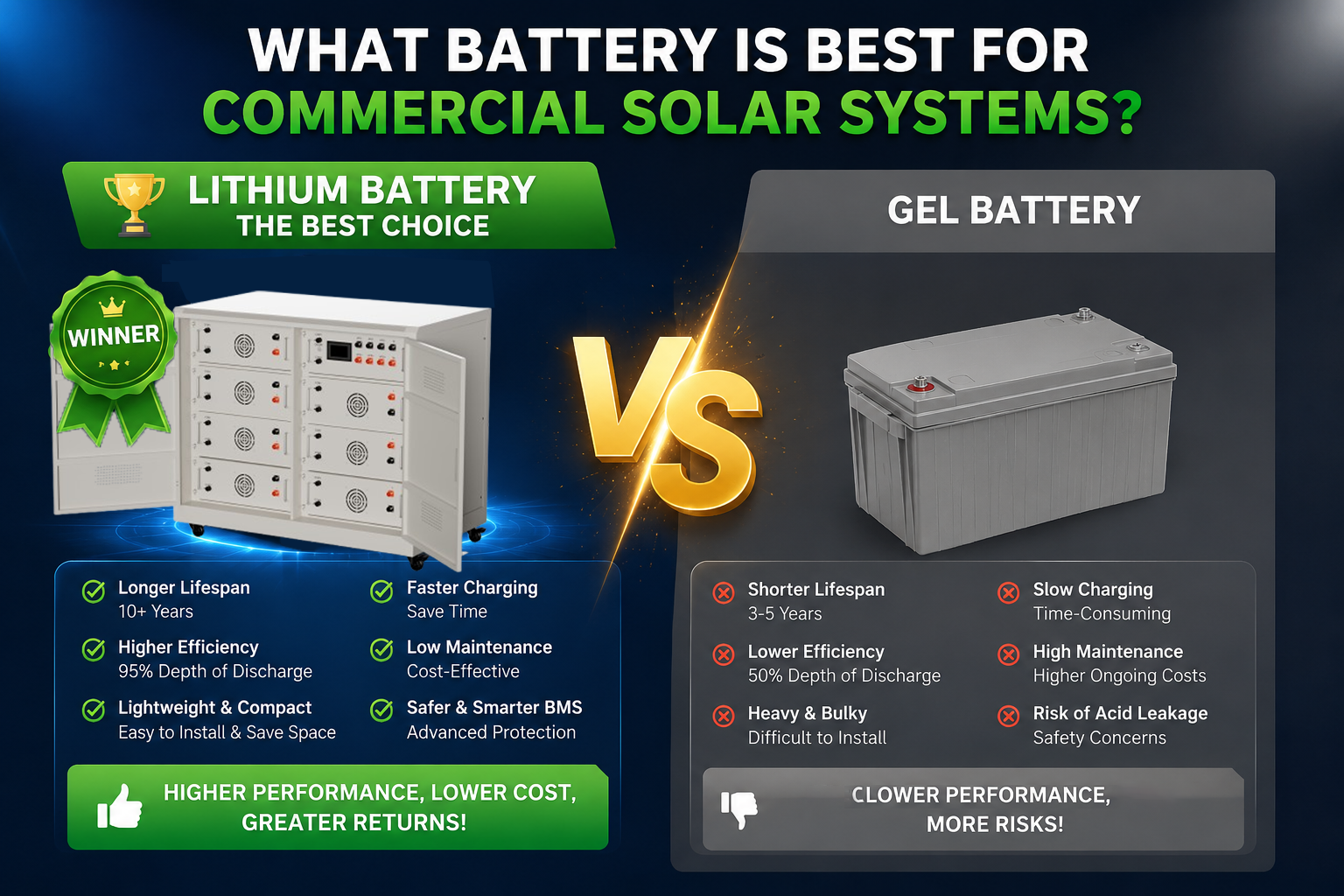
The best battery for a commercial solar system is typically a LiFePO₄ (Lithium Iron Phosphate) battery integrated into a professionally designed commercial BESS solution (Battery Energy Storage System). Compared with traditional lead-acid batteries, LiFePO₄ technology offers a longer service life, higher usable capacity, improved safety, lower maintenance requirements, and a significantly lower total cost of ownership over its lifecycle.
However, selecting the right battery involves much more than choosing a battery chemistry. A successful industrial commercial energy storage project depends on proper load analysis, battery sizing, energy management, inverter compatibility, and long-term technical support. The most reliable systems are engineered around the customer's actual operating requirements rather than standardized equipment packages.
Key Takeaways
Before selecting a battery for a commercial solar project, keep these principles in mind:
- LiFePO₄ batteries have become the preferred technology for modern commercial Battery Energy Storage Systems because of their safety, long cycle life, and high operational efficiency.
- A successful commercial BESS solution includes far more than batteries. Hybrid inverters, Battery Management Systems (BMS), Energy Management Systems (EMS), and intelligent control strategies all contribute to overall system performance.
- Battery capacity should always be determined through a professional load analysis instead of selecting a standard package based on inverter size alone.
- Different commercial applications—including hotels, factories, hospitals, warehouses, shopping malls, and office buildings—have unique energy consumption profiles that require customized storage solutions.
- Choosing the right engineering partner is just as important as choosing the right battery technology. A well-designed system delivers higher reliability, lower operating costs, and greater long-term return on investment.
Why Battery Selection Matters More Than Ever
As electricity prices continue to rise and power grids become increasingly unpredictable in many regions, businesses are investing in solar energy not only to reduce operating costs but also to improve energy security.
For commercial facilities, however, installing solar panels is only part of the solution.
Without reliable energy storage, solar power can only be used when sunlight is available. During the evening, on cloudy days, or during utility outages, businesses still need a dependable source of electricity to keep operations running.
This is why industrial commercial energy storage has become one of the fastest-growing sectors in the global renewable energy industry.
Hotels need uninterrupted power to maintain guest comfort.
Factories cannot afford production downtime caused by unstable grid electricity.
Hospitals depend on continuous power for life-critical medical equipment.
Warehouses rely on refrigeration, automation systems, and security infrastructure that must remain operational around the clock.
Although these facilities serve very different purposes, they all share one requirement:
Reliable battery storage has become essential to business continuity.
Battery Selection Is About Business Performance—Not Just Technology
Many first-time buyers believe the most important question is:
"Which battery is the best?"
From an engineering perspective, that is only part of the equation.
The better question is:
"Which battery system is best suited to my business?"
A battery should never be evaluated solely by its purchase price or energy capacity.
Instead, commercial decision-makers should consider a combination of factors, including:
- Operational reliability
- Safety performance
- Battery lifecycle
- Charging and discharging efficiency
- Maintenance requirements
- Future scalability
- Return on investment (ROI)
- Compatibility with the overall energy management system
The objective is not simply to store electricity—it is to build an energy infrastructure capable of supporting business operations every day for the next 15 to 20 years.
That is why professional engineers evaluate the entire energy ecosystem rather than focusing on batteries alone.
The Shift Toward Intelligent Commercial BESS Solutions
Over the past decade, commercial battery storage has evolved dramatically.
Early solar projects often consisted of little more than solar panels connected to basic battery banks.
Today's systems are fundamentally different.
A modern commercial BESS solution combines multiple technologies into one intelligent energy platform, including:
- High-efficiency photovoltaic (PV) modules
- LiFePO₄ Battery Energy Storage Systems (BESS)
- Three-phase hybrid inverters
- Battery Management Systems (BMS)
- Energy Management Systems (EMS)
- Remote monitoring platforms
- Automatic generator integration
- Smart energy optimization software
Rather than operating independently, these components continuously communicate with one another to determine the most efficient way to generate, store, and distribute electricity.
The result is a system that improves energy efficiency, reduces diesel consumption, protects critical equipment, and lowers the overall cost of ownership throughout the system's lifecycle.
Engineering Experience Makes the Difference
Choosing battery technology is not simply a matter of comparing technical specifications.
The same battery can perform very differently depending on how it is integrated into the overall system.
At Tanfon Solar Energy Systems, we have worked with commercial customers across Africa, Southeast Asia, the Pacific Islands, and other international markets, designing energy storage solutions for hotels, factories, hospitals, commercial buildings, farms, and industrial facilities.
These projects have demonstrated that successful battery storage depends on far more than selecting premium equipment.
Load analysis, battery sizing, inverter configuration, system integration, environmental conditions, and long-term maintenance planning all influence how a Battery Energy Storage System performs over its lifetime.
That is why every project should begin with engineering—not product selection.
Engineering Insight
One of the most common mistakes businesses make is choosing a battery based solely on its upfront cost.
In commercial applications, the battery with the lowest purchase price is rarely the most economical over its lifetime. Factors such as cycle life, usable capacity, maintenance requirements, energy efficiency, and system integration often have a much greater impact on the total cost of ownership.
For this reason, experienced engineers evaluate battery storage as part of a complete industrial commercial energy storage strategy rather than as an individual product.
Understanding Industrial Commercial Energy Storage Requirements
Selecting the right battery is not simply about choosing the latest battery technology.
The first step is understanding how the business consumes electricity.
Every commercial facility has a unique operating profile, which means there is no universal battery configuration suitable for every project. A hotel, a manufacturing plant, a hospital, and a warehouse may all require reliable backup power, but the way they consume electricity—and therefore the way their energy storage systems should be designed—is fundamentally different.
This is why professional engineers begin every industrial commercial energy storage project with a detailed load analysis rather than recommending a standard battery package.
A properly engineered system considers not only today's electricity demand but also future business expansion, seasonal operating patterns, and long-term return on investment.
Different Industries Have Different Energy Storage Needs
Commercial energy storage is no longer limited to a single industry.
Today, businesses across multiple sectors are investing in Battery Energy Storage Systems (BESS) to reduce electricity costs, improve operational reliability, and increase energy independence.
However, the priorities of each industry are very different.
Understanding these differences is the foundation of every successful commercial BESS solution.
Hotels: Protecting Guest Comfort and Business Reputation
Hotels operate 24 hours a day, making uninterrupted power supply essential.
Electricity supports almost every aspect of the guest experience, including:
- Air-conditioning systems
- Lighting
- Elevators
- Restaurants and commercial kitchens
- Laundry facilities
- Water pumps
- Internet and communication systems
- Security and surveillance equipment
Unlike many commercial buildings, hotels continue consuming significant amounts of electricity throughout the night.
As a result, battery storage is designed not only to reduce electricity costs but also to maintain guest comfort during utility outages.
Even a short power interruption can negatively affect customer satisfaction, online reviews, and brand reputation.
For hotels, battery storage is therefore an investment in both operational reliability and customer experience.
Manufacturing Facilities: Keeping Production Running
Factories have a completely different operating profile.
Production lines often require large amounts of electricity within relatively short periods of time.
Unexpected power interruptions can result in:
- Production downtime
- Equipment damage
- Material waste
- Missed delivery schedules
- Increased operating costs
For manufacturing facilities, battery storage is often used for:
- Peak shaving
- Demand charge reduction
- Backup power
- Energy cost optimization
- Production continuity
Rather than maximizing overnight backup time, many factories prioritize maintaining stable voltage and supporting critical equipment during grid disturbances.
This requires a very different battery strategy from that used in hotels.
 Tanfon 150kw Hotel Solar System Project Case
Hospitals: Reliability Above Everything Else
Hospitals represent one of the most demanding commercial applications for battery storage.
Critical departments such as operating theatres, intensive care units, emergency rooms, laboratories, and medical imaging centers require uninterrupted electricity.
For these facilities, even a brief loss of power can have serious consequences.
A professional commercial BESS solution for healthcare facilities must therefore prioritize:
- Instant backup capability
- High system redundancy
- Intelligent battery monitoring
- Automatic generator integration
- Continuous system diagnostics
Here, reliability is not simply an engineering objective—it is a safety requirement.
Warehouses and Cold Storage Facilities
Warehouses have become increasingly energy-intensive, particularly those serving logistics, pharmaceuticals, and food distribution.
Cold storage facilities depend on continuous refrigeration to protect valuable inventory.
Distribution centers increasingly rely on:
- Automated conveyor systems
- Robotics
- Barcode scanning equipment
- Warehouse management systems
- Electric forklifts
- Security infrastructure
Battery storage helps maintain uninterrupted operation while reducing demand charges during peak electricity pricing periods.
For cold-chain logistics, reliable energy storage also helps prevent inventory losses caused by unexpected utility outages.
Office Buildings and Commercial Complexes
Modern office buildings consume electricity in predictable daily patterns.
Peak demand usually occurs during business hours when lighting, elevators, HVAC systems, computers, and office equipment operate simultaneously.
Unlike hotels, electricity demand typically decreases significantly after working hours.
This predictable load profile allows engineers to optimize battery charging and discharging strategies to maximize electricity cost savings.
Battery storage is increasingly being used for:
- Peak demand management
- Time-of-use optimization
- Backup power
- Renewable energy integration
- ESG and sustainability objectives
Why One Battery Size Never Fits Every Business
One of the biggest misconceptions in commercial solar is that businesses of similar size require similar battery systems.
In practice, this assumption rarely proves correct.
Consider two buildings with identical floor areas.
One operates as a hotel with continuous air-conditioning, restaurants, and guest services.
The other functions as a warehouse with daytime operations and minimal nighttime electricity demand.
Although both buildings may occupy the same physical space, their battery storage requirements differ significantly.
Professional engineers evaluate multiple variables before recommending battery capacity, including:
- Daily electricity consumption (kWh)
- Peak demand (kW)
- Daytime versus nighttime load profile
- Critical equipment requiring backup
- Utility grid reliability
- Local electricity tariffs
- Diesel generator operating costs
- Future expansion plans
These factors have a far greater influence on battery sizing than building size alone.
Why Industrial Commercial Energy Storage Is Growing Worldwide
Across the world, businesses are changing the way they manage electricity.
Instead of relying solely on the utility grid or diesel generators, companies are adopting intelligent industrial commercial energy storage systems to gain greater control over their energy use.
Several factors are driving this transition:
- Rising electricity prices
- Unstable utility grids
- Increasing diesel fuel costs
- Corporate sustainability goals
- Expansion of renewable energy
- Carbon reduction initiatives
- Improved battery technology
- Falling lifecycle costs of LiFePO₄ batteries
As battery technology continues to improve, commercial energy storage is no longer viewed as an emergency backup system.
It has become a strategic business asset that helps organizations reduce costs, improve operational resilience, and strengthen long-term energy security.
Engineering Insight
One of the most valuable lessons from commercial projects is that battery systems should always be designed around business operations, not around battery specifications.
Two customers may request exactly the same battery capacity, yet one system may perform exceptionally well while the other fails to meet operational expectations.
The difference is rarely the battery itself.
It is the engineering process behind the system.
That is why every commercial BESS solution should begin with a detailed assessment of how electricity is generated, consumed, stored, and managed throughout the facility.
Only then can engineers recommend a solution that delivers reliable performance, efficient operation, and the lowest practical lifecycle cost.
Which Battery Technology Is Best for Commercial Solar Systems?
Selecting the right battery technology is one of the most important decisions in any commercial solar project.
The battery determines not only how much energy can be stored, but also how safely the system operates, how frequently it requires maintenance, and how much the business will spend over the next 10 to 20 years.
For many project owners, the first instinct is to compare battery prices.
However, experienced engineers know that the lowest purchase price rarely translates into the lowest lifetime cost.
A battery should always be evaluated based on its overall value, including safety, efficiency, usable capacity, service life, maintenance requirements, and compatibility with the complete commercial BESS solution.
Understanding the strengths and limitations of each battery technology is the first step toward selecting the most suitable industrial commercial energy storage system.
The Main Battery Technologies Used in Commercial Energy Storage
Although many battery chemistries exist today, only a few are commonly used in commercial and industrial solar applications.
Each technology offers different advantages depending on the project's budget, operating environment, and performance requirements.
Lead-Acid Batteries
Lead-acid batteries have been used in backup power systems for decades and remain one of the most affordable energy storage options in terms of upfront cost.
For small residential systems or applications with occasional backup requirements, they may still provide an economical solution.
However, commercial applications place much greater demands on battery performance.
Lead-acid batteries typically offer:
- Lower initial investment
- Mature manufacturing technology
- Simple installation
- Wide market availability
Despite these advantages, they also have several limitations that make them less suitable for modern commercial projects:
- Short cycle life
- Limited depth of discharge (DoD)
- Frequent maintenance requirements
- Lower charging efficiency
- Larger installation footprint
- Reduced performance in high-temperature environments
For businesses operating every day, repeated battery replacement often results in higher lifecycle costs than investing in more advanced battery technology from the beginning.
AGM and Gel Batteries
Absorbent Glass Mat (AGM) and Gel batteries are improved versions of traditional lead-acid technology.
Because they are sealed, they require less maintenance and provide better reliability than flooded lead-acid batteries.
They are commonly used in telecommunications equipment, emergency backup systems, and small commercial installations.
Compared with conventional lead-acid batteries, AGM and Gel batteries provide:
- Better vibration resistance
- Reduced maintenance
- Improved safety
- More stable performance
However, they still inherit many limitations associated with lead-acid chemistry, including relatively short cycle life and limited usable capacity.
As commercial electricity demand continues to grow, these technologies are gradually being replaced by lithium-based energy storage systems.
Lithium NMC Batteries
Nickel Manganese Cobalt (NMC) batteries are widely used in electric vehicles because they provide high energy density within a compact size.
Their lightweight design makes them suitable where installation space is limited.
In commercial solar applications, however, energy density is not always the most important consideration.
System stability, thermal safety, maintenance requirements, and long-term durability generally have a greater impact on project performance.
Although NMC batteries deliver excellent energy density, they typically require more sophisticated thermal management and additional safety protection than LiFePO₄ batteries.
For this reason, NMC technology is more common in transportation than in large-scale stationary energy storage.
LiFePO₄ Batteries
Today, LiFePO₄ (Lithium Iron Phosphate) has become the preferred battery technology for most modern industrial commercial energy storage projects.
Its popularity is driven not by marketing claims, but by measurable engineering advantages.
Compared with traditional battery technologies, LiFePO₄ offers:
- Long service life
- Excellent thermal stability
- High charging and discharging efficiency
- Deep depth of discharge
- Minimal maintenance
- Strong resistance to high operating temperatures
- Stable long-term performance
These characteristics make LiFePO₄ particularly suitable for demanding commercial environments where systems operate every day for many years.
Hotels, factories, hospitals, warehouses, shopping centers, and industrial facilities all benefit from the technology's ability to deliver reliable performance while reducing long-term operating costs.
Battery Technology Comparison
The following comparison summarizes the characteristics of the most common battery technologies used in commercial solar projects.
|
Feature |
Lead-Acid |
AGM / Gel |
Lithium NMC |
LiFePO₄ |
|
Typical Cycle Life |
500–1,000 |
800–1,500 |
3,000–5,000 |
6,000+ |
|
Recommended Depth of Discharge |
~50% |
50–60% |
80–90% |
90–95% |
|
Maintenance |
High |
Low |
Very Low |
Very Low |
|
Charging Efficiency |
Moderate |
Moderate |
High |
Very High |
|
Thermal Stability |
Moderate |
Moderate |
Good |
Excellent |
|
Safety |
Moderate |
Good |
Good |
Excellent |
|
Commercial Suitability |
Limited |
Moderate |
Good |
Excellent |
|
Total Lifecycle Cost |
High |
Medium |
Low |
Lowest |
Rather than focusing solely on purchase price, commercial decision-makers should evaluate the total cost of ownership, which includes replacement costs, maintenance, operational efficiency, and expected service life.
In many cases, a battery with a higher initial investment delivers significantly greater financial value over its lifetime.
Why Lifecycle Cost Matters More Than Purchase Price
One of the most common mistakes in commercial solar projects is evaluating batteries based only on upfront cost.
For example, a lower-cost battery may need replacement after only a few years of continuous operation.
By contrast, a LiFePO₄ battery with a longer service life can continue operating for well over a decade under proper operating conditions.
When maintenance, labor, replacement costs, and business interruptions are taken into account, the battery with the higher purchase price often becomes the more economical investment.
For commercial facilities where uninterrupted operation is critical, lifecycle cost is a far more meaningful financial indicator than equipment price alone.
Why LiFePO₄ Has Become the Industry Standard
As battery technology has evolved, the priorities of commercial customers have shifted.
Businesses today are looking for:
- Greater operational reliability
- Longer service life
- Lower maintenance costs
- Higher energy efficiency
- Improved safety
- Better return on investment
LiFePO₄ technology addresses these priorities more effectively than previous battery generations.
Combined with an intelligent commercial BESS solution, LiFePO₄ batteries help businesses maximize solar energy utilization, reduce dependence on diesel generators, and improve long-term energy resilience.
For this reason, LiFePO₄ has become the preferred choice for many hotels, factories, hospitals, logistics centers, office buildings, and other commercial facilities worldwide.
Engineering Insight
Battery technology should never be selected in isolation.
Even the highest-quality battery cannot achieve optimal performance without proper system integration.
Battery Management Systems (BMS), hybrid inverters, Energy Management Systems (EMS), charging strategies, and operating conditions all influence battery lifespan and efficiency.
From an engineering perspective, the best-performing projects are those where every component is designed to work together as part of a complete commercial BESS solution, rather than being selected independently.
Expert Recommendation
Based on our experience designing commercial energy storage projects across multiple industries, LiFePO₄ batteries consistently provide the best balance of safety, durability, efficiency, and long-term economic value.
However, battery chemistry alone does not determine project success.
A professionally engineered system—including accurate load analysis, intelligent energy management, and proper battery sizing—is what ultimately delivers reliable performance and the lowest lifecycle cost.
What Makes a Professional Commercial BESS Solution?
Choosing the right battery is only one part of designing a successful commercial solar project.
In practice, battery performance depends on how well it integrates with the rest of the energy system.
A modern commercial BESS solution is not simply a battery bank connected to solar panels. It is an intelligent energy platform that continuously balances power generation, storage, consumption, and backup sources to ensure reliable and efficient operation.
For hotels, factories, hospitals, warehouses, office buildings, and industrial facilities, system integration is often the deciding factor between a project that performs reliably for years and one that experiences frequent operational issues.
This is why professional engineers always evaluate the complete energy ecosystem rather than selecting individual components independently.
Every Component Has a Critical Role
A commercial Battery Energy Storage System (BESS) consists of several integrated technologies that work together as one coordinated system.
Although each component performs a different function, overall performance depends on how effectively they communicate with one another.
The key components include:
- Battery Energy Storage System (BESS)
- Three-phase hybrid inverter
- Battery Management System (BMS)
- Energy Management System (EMS)
- Photovoltaic (PV) array
- Fire protection system
- Remote monitoring platform
- Backup generator interface
Rather than operating separately, these systems continuously exchange data to optimize energy production, battery charging, power distribution, and system protection.
Battery Energy Storage System (BESS): More Than Battery Capacity
When many people hear the term BESS, they immediately think of batteries.
In reality, a Battery Energy Storage System represents the complete storage infrastructure rather than the batteries alone.
Besides storing electricity generated by solar panels, a professional BESS also manages:
- Charging and discharging strategies
- Peak demand reduction
- Load balancing
- Backup power switching
- Battery protection
- Grid interaction
- Generator coordination
For commercial facilities, these functions improve operational efficiency while reducing electricity costs and dependence on diesel generators.
This is why businesses investing in industrial commercial energy storage should evaluate the overall system architecture instead of focusing solely on battery specifications.
Hybrid Inverters: The Brain of Energy Conversion
If batteries store energy, hybrid inverters determine how that energy is used.
A commercial hybrid inverter performs several tasks simultaneously:
- Converts DC electricity into AC power
- Supplies electricity to facility loads
- Charges battery storage
- Receives power from the utility grid
- Integrates diesel generators when necessary
- Optimizes solar self-consumption
For commercial buildings operating multiple electrical systems, inverter performance directly affects energy efficiency and system stability.
This becomes particularly important in facilities with large three-phase loads, where voltage balance must be maintained under constantly changing operating conditions.
Professional commercial BESS solutions therefore rely on industrial-grade hybrid inverters capable of supporting continuous commercial operation rather than residential equipment adapted for larger projects.
Battery Management System (BMS): Protecting Your Investment
The Battery Management System (BMS) is one of the most important safety components within any lithium battery installation.
Instead of simply monitoring battery voltage, modern BMS technology continuously supervises battery health throughout every charging and discharging cycle.
Its responsibilities include:
- Cell voltage balancing
- Temperature monitoring
- Overcharge protection
- Over-discharge protection
- Over-current protection
- Short-circuit protection
- Battery health diagnostics
- Fault detection and alarm management
These protective functions help maximize battery lifespan while significantly improving operational safety.
Without intelligent battery management, even high-quality lithium batteries cannot achieve their expected performance or service life.
Energy Management System (EMS): Optimizing Every Kilowatt-Hour
While the BMS protects individual batteries, the Energy Management System (EMS) manages the entire energy ecosystem.
The EMS continuously analyzes:
- Solar power generation
- Battery State of Charge (SOC)
- Building electricity demand
- Grid availability
- Generator operating conditions
- Electricity tariffs
- Historical consumption patterns
Using this information, the EMS automatically determines the most efficient energy strategy at any given moment.
For example, it may prioritize:
- Solar power during daylight hours
- Battery discharge during expensive peak tariff periods
- Utility grid charging when electricity prices are lower
- Automatic generator startup during extended outages
This intelligent control improves energy utilization while maximizing financial return from the complete commercial BESS solution.
Fire Protection and Operational Safety
Safety is one of the defining characteristics of modern commercial energy storage systems.
Commercial projects often operate in hotels, hospitals, shopping centers, manufacturing facilities, and office buildings where large numbers of people are present every day.
For this reason, professional industrial commercial energy storage systems incorporate multiple layers of protection.
These typically include:
- Intelligent fire detection
- Automatic fire suppression
- Thermal monitoring
- Smoke detection
- Temperature alarms
- Electrical isolation
- Emergency shutdown procedures
Combined with the inherent thermal stability of LiFePO₄ batteries, these measures significantly reduce operational risks while ensuring compliance with commercial safety standards.
Remote Monitoring: From Reactive Maintenance to Predictive Maintenance
Modern commercial energy storage no longer relies solely on periodic on-site inspections.
Instead, intelligent monitoring platforms provide continuous visibility into system performance.
Operators can monitor:
- Solar energy production
- Battery State of Charge
- Inverter performance
- Grid status
- Generator operation
- Historical energy trends
- Alarm notifications
- Equipment health
Remote monitoring allows maintenance teams to identify abnormal operating conditions before failures occur.
This shift from reactive maintenance to predictive maintenance reduces downtime, lowers service costs, and improves overall system reliability.
For businesses operating in remote locations, predictive maintenance can be just as valuable as the equipment itself.
Why System Integration Determines Long-Term Performance
Many commercial projects fail to achieve their expected return on investment—not because individual components are poor, but because the overall system has not been properly integrated.
A premium battery cannot compensate for an undersized inverter.
A high-performance inverter cannot deliver optimal results without intelligent energy management.
Likewise, advanced monitoring software cannot improve performance if the battery capacity has been incorrectly calculated.
Successful commercial BESS solutions therefore require every component to be designed as part of one integrated engineering system.
Only when batteries, inverters, EMS, BMS, PV arrays, and backup power sources operate together can businesses achieve maximum efficiency, reliability, and long-term financial value.
Engineering Insight
One of the biggest misconceptions in commercial solar is that purchasing premium equipment automatically guarantees premium performance.
In reality, long-term system reliability depends far more on engineering integration than on individual product specifications.
Projects with carefully matched batteries, inverters, EMS, and protection systems consistently outperform projects built from high-end components that have not been designed to work together.
For this reason, professional engineers evaluate the complete energy architecture before selecting any individual component.
Expert Recommendation
When evaluating suppliers, businesses should look beyond battery capacity and equipment specifications.
A reliable supplier should be able to demonstrate expertise in system design, energy management, safety engineering, remote monitoring, and long-term technical support.
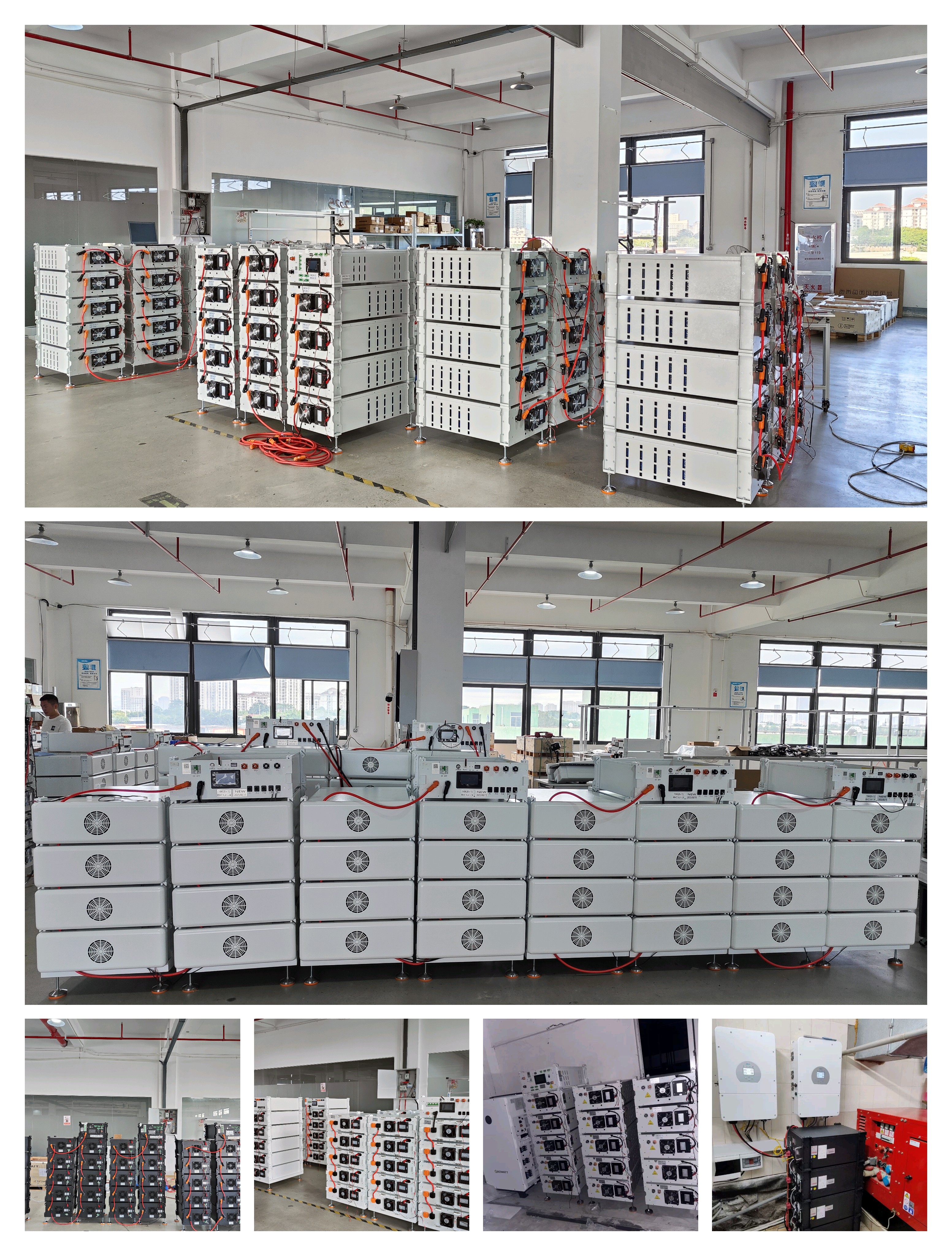
At Tanfon Solar Energy Systems, every commercial BESS solution is developed as a fully integrated energy platform rather than a collection of independent products. By combining LiFePO₄ battery technology, industrial-grade hybrid inverters, intelligent EMS and BMS, advanced safety systems, and remote monitoring, we help customers build reliable industrial commercial energy storage solutions that reduce operating costs while supporting long-term business growth.
Real Commercial Projects and the Engineering Lessons Behind Them
Battery specifications and technical comparisons provide valuable information, but the true performance of a commercial energy storage system can only be evaluated in real operating environments.
Every commercial project presents a unique combination of electrical loads, operating schedules, environmental conditions, and business objectives. While no two installations are identical, each project contributes valuable engineering experience that helps improve future system designs.
At Tanfon Solar Energy Systems, our engineering team has delivered commercial solar and energy storage projects for hotels, factories, hospitals, agricultural facilities, and industrial buildings across Africa, Southeast Asia, the Pacific Islands, and other international markets.
Although every project has different requirements, one lesson remains consistent:
Successful energy storage systems are designed around business operations—not equipment specifications.
Engineering Case Study 1
Hotel Energy Independence in Papua New Guinea
One of our most representative hospitality projects involved a hotel in Papua New Guinea that required a highly reliable hybrid solar energy system.
The hotel depended heavily on electricity for:
- Guest room air conditioning
- Restaurant operations
- Commercial kitchens
- Laundry facilities
- Gym equipment
- Public lighting
- Administrative offices
In total, approximately 80 air-conditioning units operated throughout the property, creating significant daytime and nighttime electricity demand.
Unlike many projects where customers simply purchase equipment, this client approached the project differently.
Before production began, the hotel owner visited our factory and spent three days working directly with our engineers, learning how the entire commercial BESS solution would operate, including system commissioning, battery management, fault diagnosis, and maintenance procedures.
This collaborative engineering process allowed the customer to fully understand how each component contributed to long-term operational reliability.
Engineering Decision
Instead of relying on a single battery bank, we designed the system with two independent LiFePO₄ battery banks.
This configuration allows the system to:
- Automatically switch between battery banks
- Balance charging cycles
- Extend battery service life
- Improve operational redundancy
- Reduce the risk of unexpected downtime
To further improve reliability, the system was also integrated with an intelligent diesel generator.
If prolonged cloudy weather reduces battery capacity below the predefined threshold, the Energy Management System (EMS) automatically starts the generator, supplies power to critical loads, and recharges the batteries before shutting the generator down again.
This automated strategy minimizes fuel consumption while maintaining uninterrupted hotel operations.
Business Results
Since commissioning, the hotel has experienced:
- Significantly lower diesel consumption
- Improved energy reliability
- Reduced operating costs
- Stable power supply for guests
- Simplified energy management through remote monitoring
More importantly, hotel management no longer needs to manually coordinate generators during grid failures, allowing staff to focus on guest services rather than power management.
Engineering Lesson
This project demonstrates that reliable commercial energy storage depends on intelligent system architecture rather than simply installing larger batteries.
System redundancy, automated energy management, and integrated backup strategies often contribute more to long-term reliability than battery capacity alone.
Engineering Case Study 2
Commercial Solar and Battery Storage for a Resort in Seychelles
Another project that clearly illustrates the importance of proper system design is a luxury resort in Seychelles.
The objective was not only to reduce electricity costs but also to improve energy resilience while maintaining uninterrupted guest comfort.
The installed system included:
- 150 kW hybrid solar power system
- 300 kWh LiFePO₄ Battery Energy Storage System
- 194 kWp photovoltaic array
- Intelligent EMS
- Three-phase hybrid inverter
- Remote monitoring platform
The battery capacity was carefully calculated to support overnight operation while maintaining reserve capacity for periods of reduced solar generation.
Rather than maximizing battery size, the design focused on optimizing the balance between investment cost and operational reliability.
Intelligent Energy Management
One of the most valuable features of this commercial BESS solution is its intelligent monitoring platform.
Using a mobile application, operators can remotely monitor:
- Solar power generation
- Battery State of Charge (SOC)
- Grid availability
- Building electricity demand
- Historical operating data
- Equipment status
- Local weather conditions
- Seven-day weather forecasts
This information enables operators to anticipate energy demand and make informed operational decisions before potential issues develop.
Instead of reacting to failures, the hotel now manages energy proactively.
Business Results
Since commissioning, the system has operated reliably for hundreds of consecutive days while helping the resort:
- Reduce electricity costs
- Lower diesel consumption
- Improve renewable energy utilization
- Increase operational reliability
- Simplify facility management
For hotel management, the greatest value extends beyond energy savings.
Stable electricity contributes directly to guest satisfaction, uninterrupted business operations, and long-term brand reputation.
Engineering Lesson
Battery storage should never be evaluated solely by backup duration.
A professionally engineered commercial BESS solution combines battery storage, intelligent control, forecasting, and automated energy optimization into one integrated platform.
That integrated approach delivers greater business value than increasing battery capacity alone.
Common Characteristics of Successful Commercial Projects
Although every commercial project differs, successful installations consistently share several characteristics.
First, every project begins with a professional load assessment rather than equipment selection.
Second, battery capacity is determined through engineering calculations instead of standard product packages.
Third, system integration is prioritized over individual component performance.
Finally, intelligent monitoring and predictive maintenance ensure long-term operational reliability.
These principles apply equally to hotels, manufacturing facilities, hospitals, warehouses, commercial office buildings, and other industrial commercial energy storage applications.
Regardless of project size, thoughtful engineering consistently produces better long-term results than simply installing larger or more expensive equipment.
Engineering Insight
Real-world projects consistently demonstrate that businesses do not purchase batteries—they invest in operational reliability.
While battery specifications remain important, long-term project success depends on how effectively batteries, inverters, EMS, BMS, backup generators, and monitoring systems work together.
For this reason, every commercial installation should be viewed as an integrated engineering project rather than a collection of independent products.
Expert Recommendation
Based on our experience delivering projects across multiple industries and international markets, the most successful commercial BESS solutions are those designed around each customer's operational objectives rather than standardized equipment packages.
At Tanfon Solar Energy Systems, we begin every project with detailed load analysis, electrical evaluation, and lifecycle planning. This engineering-first approach enables businesses to build reliable industrial commercial energy storage systems that reduce operating costs, improve energy resilience, and support long-term business growth.
Why Choose Tanfon Solar Energy Systems?
Selecting a supplier for a commercial energy storage project is about far more than comparing product catalogs or equipment prices.
A Battery Energy Storage System (BESS) is expected to operate reliably for 15 to 20 years. During that time, electricity demand may increase, business operations may expand, and energy costs will continue to change.
The real value of a supplier is therefore measured not only by the quality of its products, but also by its engineering expertise, system integration capabilities, manufacturing standards, and long-term technical support.
For businesses investing in industrial commercial energy storage, choosing the right engineering partner is one of the most important decisions in the entire project lifecycle.
Engineering Before Equipment
Many suppliers begin by recommending products.
Professional engineers begin by asking questions.
Before selecting batteries, inverters, or photovoltaic modules, engineers first seek to understand how electricity is actually used throughout the facility.
A professional design process typically includes:
- Electrical load analysis
- Daily energy consumption assessment
- Peak demand evaluation
- Site inspection
- Solar resource analysis
- Battery autonomy calculation
- Future expansion planning
- Return on Investment (ROI) evaluation
Only after completing these engineering assessments can the most appropriate commercial BESS solution be determined.
This approach helps businesses avoid unnecessary investment while ensuring long-term operational reliability.
Complete System Integration Rather Than Individual Products
Commercial energy storage is not simply about installing high-quality batteries.
The overall performance of a project depends on how effectively every component works together.
At Tanfon Solar Energy Systems, every project is designed as an integrated energy platform that combines:
- High-efficiency PV modules
- LiFePO₄ Battery Energy Storage Systems
- Three-phase hybrid inverters
- Intelligent Battery Management Systems (BMS)
- Advanced Energy Management Systems (EMS)
- Smart remote monitoring platforms
- Automatic generator control
- Multi-layer electrical protection systems
Instead of functioning independently, these technologies continuously exchange operational data to optimize charging strategies, battery protection, energy distribution, and system efficiency.
The result is a more stable, more intelligent, and more reliable commercial energy solution.
Engineering Experience Across Diverse Commercial Applications
Every industry presents unique operational challenges.
A hotel requires uninterrupted power to maintain guest comfort.
A manufacturing facility prioritizes production continuity and voltage stability.
Hospitals demand maximum reliability for critical medical equipment.
Warehouses depend on continuous refrigeration and automated logistics systems.
These differences cannot be addressed through standardized equipment packages.
Over the years, Tanfon Solar Energy Systems has delivered commercial solar and energy storage projects for:
- Hotels
- Manufacturing plants
- Hospitals
- Office buildings
- Agricultural facilities
- Commercial warehouses
- Industrial factories
- Remote island communities
Working across different industries and geographic regions has provided valuable engineering experience in addressing:
- Unstable utility grids
- High diesel fuel costs
- Extreme temperatures
- Three-phase unbalanced loads
- Remote off-grid environments
- High humidity and coastal corrosion
- Seasonal energy demand variations
Each completed project strengthens our ability to design reliable industrial commercial energy storage systems capable of performing under real operating conditions.
Intelligent Manufacturing and Quality Control
Reliable engineering must be supported by reliable manufacturing.
Every commercial energy storage project depends on consistent product quality, precise system integration, and comprehensive testing before delivery.
At Tanfon Solar Energy Systems, every major system undergoes multiple stages of inspection and verification before shipment.
These processes typically include:
- Battery performance testing
- Inverter functional verification
- Communication testing between EMS and BMS
- Protection system verification
- System integration testing
- Load simulation
- Charging and discharging validation
- Remote monitoring configuration
Rather than evaluating individual components separately, the complete system is tested as one integrated solution.
This process significantly reduces commissioning time while improving long-term operational reliability.
Remote Monitoring and Predictive Maintenance
Commercial projects often operate in locations where immediate on-site technical support may not always be available.
To improve operational efficiency, modern energy storage systems increasingly rely on intelligent remote monitoring.
Through the monitoring platform, customers can access real-time information including:
- Solar energy production
- Battery State of Charge (SOC)
- Battery health
- Grid operating status
- Load consumption
- Generator operating conditions
- Historical performance data
- Alarm notifications
Meanwhile, engineers can remotely analyze system performance, identify abnormal operating conditions, and provide maintenance recommendations before equipment failures occur.
This predictive maintenance approach helps minimize downtime while reducing maintenance costs throughout the system lifecycle.
Long-Term Partnership Rather Than Equipment Delivery
Commercial energy storage projects continue evolving long after installation.
Businesses expand.
Electricity demand increases.
Additional buildings may be added.
Battery capacity may require future expansion.
Software functions continue to evolve.
For this reason, a professional supplier should provide more than equipment delivery.
Long-term engineering support includes:
- Technical consultation
- System optimization
- Software upgrades
- Capacity expansion planning
- Operational analysis
- Preventive maintenance
- Technical training
Supporting customers throughout the entire project lifecycle helps maximize return on investment while extending system performance for many years.
Supporting Businesses on the Journey Toward Energy Independence
The objective of commercial energy storage extends beyond reducing electricity bills.
Businesses are increasingly seeking:
- Greater energy independence
- Lower operating costs
- Reduced diesel consumption
- Improved operational resilience
- Better sustainability performance
- Long-term financial stability
A professionally engineered commercial BESS solution helps organizations achieve these objectives while improving overall business competitiveness.
Whether the application involves a hotel, manufacturing facility, hospital, warehouse, agricultural project, or industrial plant, intelligent energy storage has become an important component of modern business infrastructure.
Engineering Insight
One lesson repeatedly demonstrated across commercial projects is that the most successful systems are not necessarily those with the largest battery capacity or the most expensive equipment.
Instead, the highest-performing projects are those where engineering decisions are guided by real operational requirements, supported by intelligent system integration, and maintained through long-term technical service.
Reliable engineering consistently delivers greater value than oversized equipment.
Expert Recommendation
When evaluating suppliers for an industrial commercial energy storage project, businesses should look beyond individual product specifications.
A capable engineering partner should be able to demonstrate expertise in:
- Commercial load analysis
- Battery sizing
- System integration
- EMS and BMS configuration
- Remote monitoring
- Safety engineering
- Lifecycle cost optimization
- Long-term technical support
At Tanfon Solar Energy Systems, these engineering principles form the foundation of every commercial BESS solution we deliver. By combining advanced technology with practical project experience, we help businesses build energy systems that are reliable, scalable, and designed to support sustainable growth for years to come.
Why Businesses Choose Tanfon Solar Energy Systems
Customers around the world choose Tanfon Solar Energy Systems not simply because of the equipment we manufacture, but because of the engineering value we provide throughout the entire project lifecycle.
Our customers benefit from:
- Customized commercial energy storage system design
- Professional load analysis before equipment selection
- Integrated Battery Energy Storage System (BESS) solutions
- Intelligent EMS and BMS integration
- Industrial-grade hybrid inverter technology
- Comprehensive remote monitoring capabilities
- Predictive maintenance support
- Scalable system architecture for future expansion
- Long-term engineering and technical assistance
These capabilities enable businesses to improve energy efficiency, reduce operating costs, strengthen energy security, and maximize the long-term value of their investment.
Table of Contents
- A Complete Guide to Industrial Commercial Energy Storage
- Quick Answer
- Key Takeaways
- Why Battery Selection Matters More Than Ever
- Battery Selection Is About Business Performance—Not Just Technology
- The Shift Toward Intelligent Commercial BESS Solutions
- Engineering Experience Makes the Difference
- Engineering Insight
- Understanding Industrial Commercial Energy Storage Requirements
- Different Industries Have Different Energy Storage Needs
- Hotels: Protecting Guest Comfort and Business Reputation
- Manufacturing Facilities: Keeping Production Running
- Hospitals: Reliability Above Everything Else
- Warehouses and Cold Storage Facilities
- Office Buildings and Commercial Complexes
- Why One Battery Size Never Fits Every Business
- Why Industrial Commercial Energy Storage Is Growing Worldwide
- Engineering Insight
- Which Battery Technology Is Best for Commercial Solar Systems?
- The Main Battery Technologies Used in Commercial Energy Storage
- Lead-Acid Batteries
- AGM and Gel Batteries
- Lithium NMC Batteries
- LiFePO₄ Batteries
- Battery Technology Comparison
- Why Lifecycle Cost Matters More Than Purchase Price
- Why LiFePO₄ Has Become the Industry Standard
- Engineering Insight
- Expert Recommendation
- What Makes a Professional Commercial BESS Solution?
- Every Component Has a Critical Role
- Battery Energy Storage System (BESS): More Than Battery Capacity
- Hybrid Inverters: The Brain of Energy Conversion
- Battery Management System (BMS): Protecting Your Investment
- Energy Management System (EMS): Optimizing Every Kilowatt-Hour
- Fire Protection and Operational Safety
- Remote Monitoring: From Reactive Maintenance to Predictive Maintenance
- Why System Integration Determines Long-Term Performance
- Engineering Insight
- Expert Recommendation
- Real Commercial Projects and the Engineering Lessons Behind Them
- Engineering Case Study 1
- Hotel Energy Independence in Papua New Guinea
- Engineering Case Study 2
- Commercial Solar and Battery Storage for a Resort in Seychelles
- Common Characteristics of Successful Commercial Projects
- Engineering Insight
- Expert Recommendation
- Why Choose Tanfon Solar Energy Systems?
- Engineering Before Equipment
- Complete System Integration Rather Than Individual Products
- Engineering Experience Across Diverse Commercial Applications
- Intelligent Manufacturing and Quality Control
- Remote Monitoring and Predictive Maintenance
- Long-Term Partnership Rather Than Equipment Delivery
- Supporting Businesses on the Journey Toward Energy Independence
- Engineering Insight
- Expert Recommendation
- Why Businesses Choose Tanfon Solar Energy Systems
