
 EN
What Is a Hybrid Solar System and How Does It Work?
A hybrid solar system combines solar power generation, battery energy storage, and a connection to the utility grid. Unlike a conventional grid-tied solar system, which may shut down during a power outage for safety reasons, a properly configured hybrid system can continue supplying designated loads from solar energy and batteries when the grid fails.
For commercial facilities, factories, communication infrastructure, and agricultural operations, this flexibility can improve power reliability and help manage electricity costs. When combined with an intelligent energy management system, a hybrid solar installation can coordinate solar generation, battery charging and discharging, and electricity imported from or exported to the grid.
This guide explains how a hybrid solar system works, how it can optimize energy costs, what to consider when selecting battery storage, and how to evaluate system safety and long-term performance. It also explores a real Tanfon project: a 100kW hybrid solar system with 200kWh of battery storage for a communication base in Dili, East Timor.
1. How Does a Hybrid Solar Inverter Work?
A hybrid solar system combines the functions of a grid-connected solar installation and a battery energy storage system. Its hybrid inverter manages the flow of electricity between the solar panels, batteries, connected loads, and utility grid.
The exact operating modes depend on the inverter model, system configuration, local grid requirements, and energy management settings.
How Electricity Flows Through a Hybrid Solar System
During normal operation, solar panels generate direct current (DC) electricity. The hybrid inverter converts this energy into alternating current (AC) for compatible electrical loads.
When solar generation exceeds the facility's immediate demand, the surplus energy may be used to charge the battery. Depending on the system configuration and local regulations, additional electricity may be exported to the grid.
When solar production decreases, such as in the evening or during cloudy weather, the battery can discharge to support connected loads. If solar and battery power are insufficient, the system can draw electricity from the utility grid when it is available.
During a grid outage, a properly designed hybrid system can supply designated backup loads using available solar and battery energy. However, the inverter must support backup operation, and the system must be installed with the required isolation and protection arrangements.
The Role of Intelligent Energy Management
An energy management system (EMS) helps coordinate the available power sources according to predefined operating priorities. Depending on the system, these priorities may include:
Supplying facility loads with available solar energy.
- Charging the battery when sufficient solar energy is available.
- Using stored energy when solar production is low.
- Reducing grid electricity consumption during expensive tariff periods.
- Maintaining a reserve of battery capacity for backup power.
- Coordinating the grid connection and other supported power sources.
Modern hybrid inverters may also provide remote monitoring, allowing users or technical teams to review solar generation, battery state of charge (SOC), grid consumption, and load demand.
Grid-connected hybrid systems must comply with applicable electrical and interconnection requirements. Anti-islanding protection, for example, helps prevent a grid-connected inverter from unintentionally energizing a utility circuit that has been disconnected. Backup operation requires an appropriately designed system that can safely isolate the loads from the utility grid.
The result is a flexible power architecture that can improve energy utilization, increase resilience, and provide greater control over electricity consumption.
2. Energy Cost Optimization, Time-of-Use Tariffs, and Grid Support
One of the main advantages of a hybrid solar system is its ability to coordinate solar generation and battery storage to reduce electricity costs.
In some markets, electricity prices vary according to the time of day. Commercial facilities may pay higher rates during peak-demand periods and lower rates during off-peak hours. Where these tariffs apply, a suitably configured hybrid system can help users shift electricity consumption away from expensive periods.
How Battery Storage Can Reduce Electricity Bills
During periods of strong solar generation, the system can supply facility loads directly and charge the battery with surplus energy.
Later, when electricity prices rise or solar generation declines, the stored energy can be used to support the facility's demand. This may reduce the amount of electricity purchased from the grid during high-cost periods.
The potential savings depend on several factors:
- Local electricity tariffs and the difference between peak and off-peak prices.
- The facility's daily load profile.
- Available solar generation throughout the year.
- Battery capacity, power rating, and usable energy.
- Battery charging and discharging efficiency.
- System operating settings and maintenance costs.
Battery storage does not automatically guarantee lower bills. The system must be configured around the customer's actual consumption pattern and electricity tariff. In some markets, the financial benefit comes mainly from avoiding outages or reducing diesel consumption rather than from time-of-use pricing.
Supporting Commercial Energy Management
For facilities with substantial electricity demand, an intelligent hybrid system can help manage peak loads and coordinate different energy sources. This may be valuable for offices, factories, warehouses, hotels, and communication facilities where unexpected interruptions or high electricity costs can affect operations.
Some advanced installations can also provide grid-support services, such as reactive power support or frequency response, where the equipment is capable of doing so and the utility permits participation.
Participation in virtual power plant (VPP) programs or other grid-service arrangements depends on local regulations, utility requirements, market access, and the system's technical capabilities. These services should therefore be evaluated as potential opportunities rather than assumed benefits of every hybrid solar installation.
For commercial buyers, the most effective design begins with a detailed assessment of energy consumption, grid reliability, electricity tariffs, and the financial value of backup power.
3. Battery Chemistry, System Safety, and Long-Term Performance
Battery storage is a key component of a hybrid solar system. It allows solar energy generated during the day to be used later and can provide backup electricity when the grid is unavailable.
Selecting the appropriate battery involves more than comparing nominal capacity. Battery chemistry, power capability, operating temperature, inverter compatibility, protection functions, and warranty conditions all affect the performance of the complete system.
Why LiFePO4 Batteries Are Widely Used
Lithium iron phosphate (LiFePO4) batteries are commonly used in commercial and industrial energy storage applications because of their cycle-life characteristics, thermal stability, and usable capacity under suitable operating conditions.
A battery management system (BMS) monitors battery operating parameters and helps protect the battery from conditions outside its permitted limits. Depending on the battery design, these parameters may include cell voltage, temperature, current, and state of charge.
When evaluating a battery storage solution, commercial buyers should consider:
- Nominal energy capacity, measured in kilowatt-hours (kWh).
- Continuous charge and discharge power.
- Permitted depth of discharge.
- Charging and discharging efficiency.
- Operating temperature range and thermal management.
- BMS communication and hybrid inverter compatibility.
- Applicable safety certifications and warranty conditions.
A battery's capacity and the inverter's power rating describe different characteristics. The battery capacity, measured in kWh, indicates how much energy it can store. The inverter's power rating, measured in kW, indicates how much power it can convert or deliver under specified conditions.
For example, a 200kWh solar power system with a 200kWh battery storage capacity can store a substantial amount of energy, but the actual usable energy depends on the battery's operating limits and system efficiency. The duration of backup power also depends on the loads connected to the system.
A 200kWh solar storage battery may be appropriate for some commercial facilities, but it is not a universal specification. Engineers should calculate the required storage based on daily energy consumption, critical loads, backup duration, and expected periods of low solar generation.
Understanding Battery and System Safety
Battery safety depends on the complete installation, not just the battery chemistry. Correct electrical design, suitable protective devices, thermal management, proper ventilation where required, and compatible system controls all contribute to safe operation.
Relevant standards and certifications may include requirements for battery modules, energy storage systems, electrical equipment, and grid interconnection. UL 1973, UL 9540, and CE-related conformity requirements address different products and regulatory contexts; they are not interchangeable, and not every product or project necessarily carries all of them.
Before purchasing a system, buyers should verify the actual certifications and compliance documentation applicable to the specific battery, inverter, and installation.
A well-integrated battery and inverter system can help improve operational reliability and support long-term performance when it is installed, operated, and maintained according to the manufacturer's requirements.
4. Real Project Example: 100kW Hybrid Solar System with 200kWh Battery Storage in East Timor
Tanfon's project for a communication base in Dili, East Timor, demonstrates how a hybrid solar system can support facilities that require reliable electricity around the clock.
Communication infrastructure relies on servers and electronic equipment that must remain operational. Power interruptions can affect service continuity, while high local electricity costs can increase operating expenses. For this project, the customer required a reliable, integrated power solution together with technical training and long-term maintenance capability.
Project Overview
The project included the following configuration:
- Location: Dili, East Timor.
- Application: Communication base station.
- Solar system capacity: 100kW.
- Battery storage capacity: 200kWh.
- Solar panels: 170 panels rated at 600W each.
- Inverter: MPS 100kW hybrid inverter.
- Power output: Three-phase.
- System features: Solar generation, battery storage, grid integration, and remote monitoring.
The nominal rating of 170 panels at 600W each corresponds to 102kWp of installed PV module capacity. This is distinct from the 100kW inverter rating. Actual solar generation varies with sunlight, temperature, shading, and other operating conditions.
Project Challenges and Engineering Solution
The communication base required continuous electricity to support its servers and communication equipment. High local electricity prices also made operating costs an important consideration.
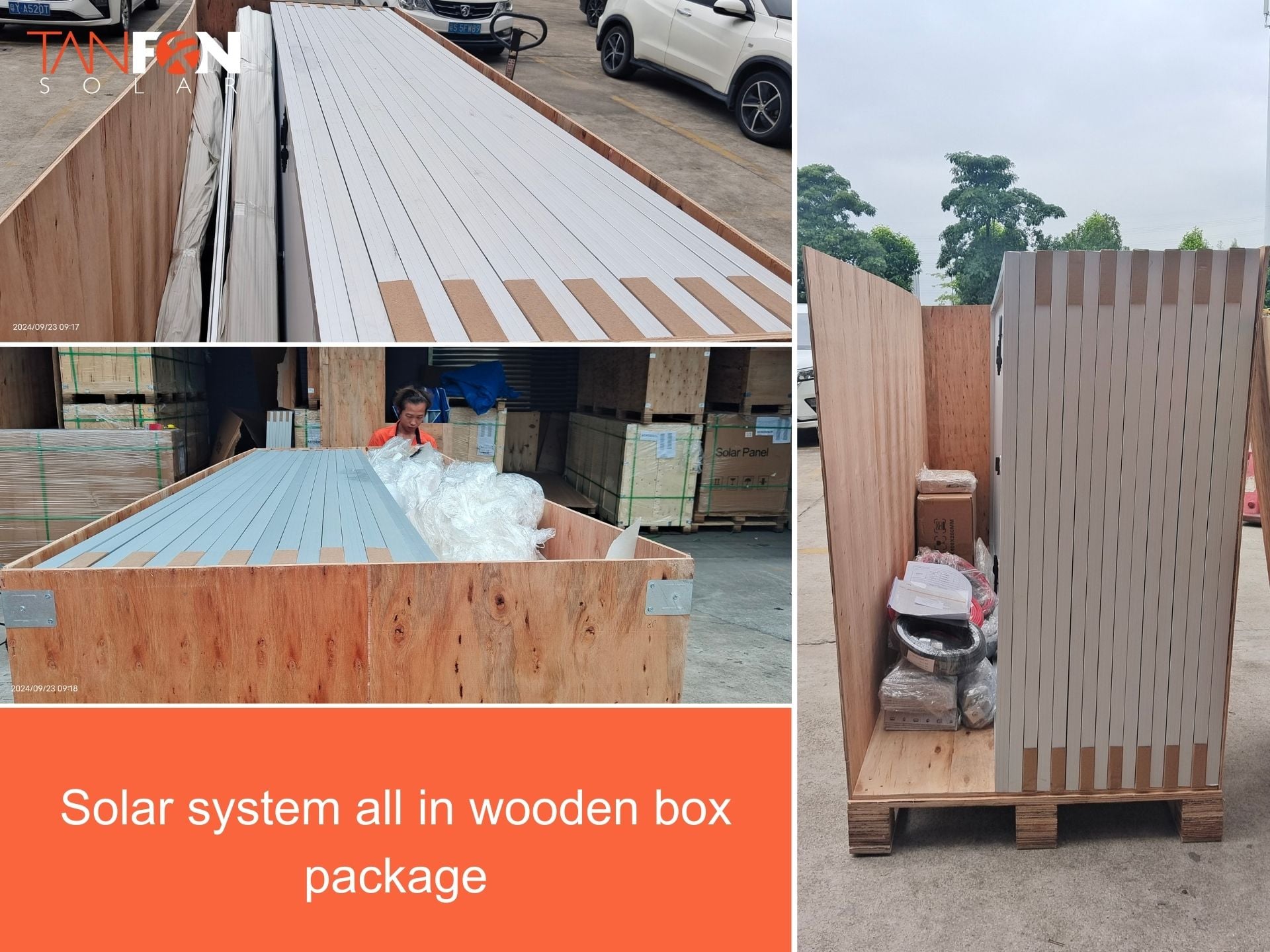
Tanfon supplied a complete solution covering system design, equipment supply, on-site installation, commissioning, and technical training. Engineers were dispatched to the project site to complete system integration and help ensure that the equipment operated as intended.
The system combines solar panels, a 100kW hybrid inverter, and 200kWh of lithium battery storage. Its three-phase output supports the project's electrical configuration, while remote monitoring and intelligent energy management help operators monitor system performance.
Reported Project Outcomes
According to Tanfon's published project case study, the installation:
- Supported stable 24/7 power supply for communication base operations.
- Enabled remote monitoring of system performance.
- Included ongoing technical support and maintenance.
- Provided operational and maintenance training for the local team.
- Helped strengthen the customer's ability to operate and maintain the system.
These results illustrate why commercial hybrid solar projects should be evaluated as complete engineering solutions. In addition to equipment capacity, the design must consider load requirements, energy storage, system integration, commissioning, monitoring, and the customer's ability to maintain the installation over time.
Read the full project case study: 100kW Hybrid Solar System for Communication Base in Dili, East Timor.
Although this installation serves a communication base rather than a farm, the underlying engineering principles also apply to commercial farms and other facilities that require dependable electricity. The system architecture must always be adapted to the application's actual loads and operating conditions.
5. Applying Hybrid Solar Technology to Farms and Commercial Facilities
Hybrid solar technology can be applied to a wide range of commercial and industrial settings. The appropriate system configuration depends on the facility's load profile, available power sources, backup requirements, and financial objectives.
Hybrid Solar Systems for Farms
A solar system for farm applications may need to support irrigation pumps, cold storage, ventilation, processing equipment, lighting, and water supply. Some of these loads operate during the day, while others may need electricity overnight.
A properly designed hybrid system can combine solar generation and battery storage with the grid or a compatible diesel generator, where available. This can help farm operators manage electricity costs while maintaining power for essential equipment.
For farms with large motors, inverter selection must account for startup current and simultaneous loads. Three-phase solar inverter systems are often relevant when agricultural equipment requires three-phase power.
The storage capacity should be based on the energy required during the intended backup period. A larger battery is not necessarily the best choice if the system's main limitation is inverter output power or insufficient solar generation.
100kW Commercial Solar Systems
A 100kW commercial solar system may be suitable for certain offices, factories, warehouses, farms, and other facilities, but the correct rating depends on the actual electrical demand.
For a hybrid installation, engineers should assess:
- Peak and continuous load requirements.
- Daily energy consumption.
- Solar resource and available installation area.
- Battery capacity and backup duration.
- Grid availability and generator integration.
- Inverter overload capability and phase requirements.
- Applicable electrical and interconnection standards.
A 3 phase hybrid solar system can be particularly useful for commercial facilities with three-phase loads and a need to coordinate solar power, battery storage, and grid electricity. However, its backup capability and supported operating modes must be confirmed for the specific inverter model.
Off-Grid Solar Storage vs. Hybrid Storage
An off-grid solar storage system is designed to operate independently of the utility grid. It requires a carefully balanced combination of solar generation, battery storage, power conversion, and load management.
A hybrid system, by contrast, can use the utility grid as an additional source of electricity when it is available and configured for that purpose.
For sites with unreliable grids, the ability to combine solar, batteries, and a backup generator may offer additional operational flexibility. In locations where the grid is unavailable, a fully off-grid design may be more appropriate, but the system must be sized for periods of low solar generation and the required backup duration.
Choosing between these architectures requires a site-specific engineering assessment rather than relying solely on nominal kW or kWh ratings.
6. Why Engineering Experience and Local Support Matter
A hybrid solar system is a long-term infrastructure investment. Its performance depends on the quality of the equipment, the suitability of the system design, correct installation, commissioning, and access to technical support.
Tanfon provides solar and battery energy storage solutions for commercial and industrial applications. The company also has extensive experience in Africa, where projects may face unstable grid supplies, high diesel dependence, challenging site conditions, and logistical constraints.
For commercial and industrial customers, practical engineering support can include:
- Load analysis and system configuration.
- Solar panel, inverter, and battery selection.
- Assessment of grid and generator integration.
- Technical documentation and installation guidance.
- Commissioning and operational training.
- Remote monitoring and troubleshooting support.
- After-sales service and maintenance coordination.
For projects in Africa, local operating conditions are particularly important. High ambient temperatures, dust, grid instability, and the availability of qualified maintenance personnel should all be considered during system design.
Tanfon's experience serving customers across more than 160 countries, together with its work on projects in African markets, provides a foundation for developing solutions tailored to different operating environments. However, every project still requires an individual assessment to ensure that the proposed configuration meets its technical and commercial requirements.
Before requesting a quotation, customers can prepare their equipment list, daily electricity consumption, existing electricity bills or diesel usage records, location, and backup requirements. This information helps engineers evaluate the appropriate solar capacity, inverter rating, and battery storage size.
Frequently Asked Questions
1. What is the main difference between a hybrid solar system and a grid-tied solar system?
A hybrid solar system combines solar power with battery storage and can provide backup power when designed for that function. A conventional grid-tied system typically relies on the utility grid and generally shuts down during a grid outage unless it includes a suitable backup arrangement.
2. Can a hybrid solar system provide power during a grid outage?
Yes, if the inverter supports backup operation and the system includes the required isolation and protection equipment. The available backup duration depends on battery capacity, solar generation, and the connected loads.
3. Is a 200kWh solar storage battery enough for a commercial facility?
It depends on the facility's energy consumption, required backup duration, and usable battery capacity. A 200kWh battery may support some commercial applications, but a load assessment is needed to determine whether it is sufficient for the intended operation.
4. What is the difference between a 100kW commercial solar system and a 200kWh battery?
A 100kW rating describes power capacity, while a 200kWh rating describes energy storage capacity. They are different specifications and should be selected together according to the facility's power demand and energy requirements.
5. Can a three-phase hybrid inverter work with a diesel generator?
Some hybrid inverters support generator integration, but compatibility depends on the specific model, electrical configuration, control settings, and generator characteristics. The design should be verified by the system supplier or qualified engineer before installation.
6. Can a hybrid solar system reduce electricity costs?
It can, depending on solar generation, electricity prices, load patterns, battery efficiency, and system operating settings. Savings may come from using solar electricity directly, shifting energy consumption to lower-cost periods, or reducing diesel generator use where applicable. Actual savings should be calculated using site-specific data.
7. How should I choose the right hybrid solar system for my project?
Start with a detailed assessment of connected loads, daily energy consumption, peak demand, grid reliability, and backup requirements. Then determine the appropriate solar capacity, inverter rating, battery storage, and system protection requirements.
Conclusion
A hybrid solar system integrates solar generation, battery storage, and grid electricity to provide greater control over energy use and improved power resilience. Its effectiveness depends on correctly matching the inverter, battery, solar array, and energy management strategy to the facility's actual requirements.
Tanfon's 100kW hybrid solar project with 200kWh of battery storage in Dili, East Timor, demonstrates the importance of complete system integration, on-site commissioning, remote monitoring, and technical training for facilities that require continuous power.
For commercial buildings, farms, factories, and communication infrastructure, the right solution should be based on real load data, operating conditions, backup requirements, and long-term service needs.
If you are planning a commercial solar or battery storage project, a site-specific engineering assessment is the best starting point for selecting a reliable and cost-effective system.
Table of Contents
- What Is a Hybrid Solar System and How Does It Work?
- 1. How Does a Hybrid Solar Inverter Work?
- 2. Energy Cost Optimization, Time-of-Use Tariffs, and Grid Support
- 3. Battery Chemistry, System Safety, and Long-Term Performance
- 4. Real Project Example: 100kW Hybrid Solar System with 200kWh Battery Storage in East Timor
- 5. Applying Hybrid Solar Technology to Farms and Commercial Facilities
- 6. Why Engineering Experience and Local Support Matter
-
Frequently Asked Questions
- 1. What is the main difference between a hybrid solar system and a grid-tied solar system?
- 2. Can a hybrid solar system provide power during a grid outage?
- 3. Is a 200kWh solar storage battery enough for a commercial facility?
- 4. What is the difference between a 100kW commercial solar system and a 200kWh battery?
- 5. Can a three-phase hybrid inverter work with a diesel generator?
- 6. Can a hybrid solar system reduce electricity costs?
- 7. How should I choose the right hybrid solar system for my project?
- Conclusion
