
 EN
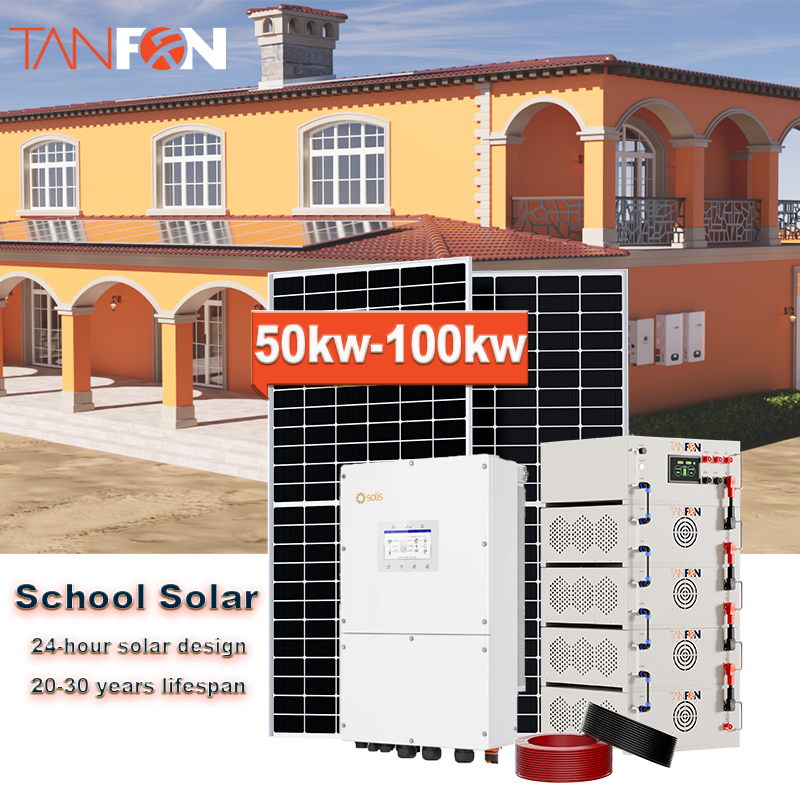
How to Design Solar Power System for Schools?
Schools need more than electricity to keep the lights on. Reliable power supports classroom learning, air conditioning, computer laboratories, administrative operations, security systems, and communication infrastructure. In regions where grid electricity is unstable or expensive, power interruptions can disrupt daily activities and increase operating costs.
A well-designed school solar power system can help educational institutions use renewable energy, reduce dependence on diesel generators, and maintain a more reliable electricity supply. However, successful implementation requires more than selecting solar panels and an inverter. Engineers must assess the school's electricity demand, operating schedule, existing power infrastructure, battery storage requirements, and safety conditions.
This guide explains the key considerations for designing a solar power system for schools, including grid-connected and hybrid configurations, battery storage, electrical safety, sustainability, and engineering support. A real 150kW hybrid solar project in Monrovia, Liberia, illustrates how a customized solution can address the power challenges faced by an African school.
1. Understand School Electricity Demand Before Sizing the Solar System
The first step in designing a school solar power system is to understand how electricity is used throughout the day.
Unlike many residential buildings, schools often have concentrated daytime demand. Classrooms, computer laboratories, libraries, administrative offices, cafeterias, and air-conditioning systems may operate simultaneously during teaching hours. Boarding schools may also require electricity for dormitories, kitchens, security lighting, and evening study sessions.
Electricity demand can decrease during weekends, public holidays, and school vacations. However, essential loads such as security systems, network equipment, refrigeration, and selected administrative facilities may continue to operate.
Before determining the required system capacity, engineers should evaluate:
- Daily and seasonal electricity consumption: Review electricity bills, meter records, and operating schedules to understand actual energy demand.
- Peak power demand: Identify the maximum simultaneous load, particularly when multiple air conditioners, laboratory equipment, and other high-power appliances operate together.
- Critical loads: Determine which circuits must remain operational during a grid outage.
- Existing electrical infrastructure: Assess the distribution boards, wiring, earthing, protection devices, and compatibility of the proposed solar equipment.
- Future expansion: Consider whether the school plans to add classrooms, laboratories, dormitories, or additional air-conditioning units.
For example, a school with dozens of air conditioners may require a substantially different system from a smaller institution that mainly uses lighting, computers, and fans. The number of appliances alone is not enough to determine the correct capacity; their rated power, operating hours, starting currents, and simultaneous usage must also be considered.
A professional load assessment helps engineers select an appropriate inverter rating, photovoltaic capacity, and battery storage configuration. It also reduces the risk of oversizing the system or leaving important loads without sufficient backup power.
2. Choose the Right Solar System Architecture for the School
The best solar configuration depends on the school's grid conditions, electricity tariffs, backup requirements, and available budget. The main options include grid-connected solar, hybrid solar, and off-grid solar systems.
Grid-Connected Solar Systems
A grid-connected photovoltaic system generates electricity from solar panels and supplies it to the school's electrical loads. When solar generation is insufficient, the school can draw electricity from the utility grid.
If local regulations permit surplus electricity export and the necessary agreements are in place, excess solar generation may be exported to the grid. The financial benefit depends on local net-metering rules, export tariffs, and utility policies.
Grid-connected solar can be a suitable option for schools with a reliable grid and a strong daytime electricity demand. However, a conventional grid-tied inverter normally shuts down during a grid outage for safety reasons. Therefore, a standard grid-connected system should not be assumed to provide backup power during blackouts.
Hybrid Solar Systems
A hybrid solar system combines photovoltaic generation with battery storage and can integrate utility electricity and a diesel generator where required.
During sunny periods, solar power can supply the school's electrical loads. Excess generation may charge the batteries, depending on the system design and operating settings. When solar generation decreases or the grid fails, the battery and other available power sources can help maintain electricity supply to designated loads.
A properly engineered hybrid system can provide several benefits:
- Reduce grid electricity consumption and diesel generator runtime.
- Maintain power to selected critical loads during grid interruptions.
- Improve energy management by coordinating solar generation, battery charging and discharging, and generator operation.
- Support more predictable electricity costs, depending on local tariffs and system performance.
For schools in areas with frequent power interruptions, a solar energy system hybrid 150kw may be worth evaluating when the measured load profile and backup requirements justify this capacity. The final configuration should be based on engineering calculations rather than the school's size alone.
Off-Grid Solar Systems
An off-grid solar system operates independently of the utility grid. It may combine solar panels, battery storage, inverters, and a backup generator to meet electricity demand when solar generation is insufficient.
An off grid solar power system 150kw may be considered for a large school or campus with substantial electricity demand and limited or unavailable grid access. However, the inverter's 150kW rating describes power capacity, not the amount of energy available throughout the day or night.
Designers must also calculate daily energy consumption, solar generation across different seasons, battery autonomy, generator requirements, and the expected duration of low-solar conditions.
For schools that already have grid access but experience frequent outages, a hybrid architecture may offer a more practical balance between energy savings and backup reliability.
3. Size the Solar Panels, Inverter, and Battery Storage Correctly
A reliable school solar installation requires coordinated sizing of the photovoltaic array, inverter, battery, and backup power sources. These components perform different functions and should not be selected independently.
Solar Panel Capacity
The required photovoltaic capacity depends on daily energy consumption, available solar irradiation, shading, panel orientation, system losses, and seasonal weather conditions.
Engineers should inspect the available roof or ground-mounting area and confirm that the proposed installation is structurally suitable. Roof condition, load-bearing capacity, drainage, maintenance access, and shading from nearby buildings or trees should all be considered.
The number of solar panels can then be calculated from the required array capacity and the wattage of each panel, with appropriate allowances for system design and installation constraints.
Inverter Capacity
The inverter must support the school's expected operating loads, including simultaneous demand from air conditioners, computers, pumps, and other equipment.
For schools with substantial air-conditioning loads, engineers should pay particular attention to compressor starting current, load diversity, phase balance, and transient demand. The inverter's continuous output rating and overload capability must be compatible with the actual loads.
Three-phase power distribution may be appropriate for larger campuses with three-phase equipment. Protection settings, cable sizing, and the electrical distribution design must be verified by qualified professionals.
Battery Storage Capacity
Battery storage is especially important when the school experiences frequent outages or needs electricity after sunset.
Battery capacity is measured in kilowatt-hours (kWh), while inverter output capacity is measured in kilowatts (kW). A 150kW inverter does not automatically mean that the system can supply 150kW for a full day. The available operating time depends on battery capacity, the actual load, conversion losses, allowable depth of discharge, and whether solar generation or a generator is available during the outage.
A practical battery design should consider:
- The energy consumption of critical loads during an outage.
- The expected duration of grid interruptions.
- The required reserve capacity and battery operating limits.
- The available solar generation for recharging.
- Whether the generator can support loads or recharge the battery when necessary.
For schools that require continuous operation, combining battery storage with a compatible generator can provide an additional source of power during prolonged outages or periods of low solar generation.
4. Real Project Example: A 150kW Hybrid Solar System for a School in Monrovia, Liberia
A real project in Monrovia, Liberia, demonstrates how solar generation, battery storage, and a backup generator can be combined to address the electricity needs of an educational facility.
The Challenge: Unstable Grid Power and High Air-Conditioning Demand
The school operated approximately 40 air conditioners and experienced frequent power interruptions. Unstable grid electricity created a practical challenge for maintaining a consistent power supply across the school's facilities.
Because air conditioning can represent a significant electrical load in warm climates, the system needed to account for substantial demand as well as the school's requirement for more reliable electricity.
Simply installing solar panels would not have addressed every operating condition. The solution also needed energy storage and coordination with the school's existing backup generation arrangement.
The Solution: A Customized 150kW Hybrid Solar Configuration
TANFON specified a hybrid solar system combining a 150kW MPS inverter, 286kWh of battery storage, and a photovoltaic array. The school also used a generator in conjunction with the solar system to support electricity availability when required.
The documented system configuration was as follows:
|
Component |
Project configuration |
|
Project location |
Monrovia, Liberia |
|
Application |
School |
|
System type |
Hybrid solar system |
|
Inverter |
150kW MPS inverter |
|
Battery storage |
286kWh |
|
Solar panels |
288 panels rated at 600W each |
|
Nominal PV capacity |
172.8kWp |
|
Backup power |
Generator used in conjunction with the system |
|
Main challenge |
Frequent outages and unstable grid electricity |
|
Major electrical load |
Approximately 40 air conditioners |
The 288 solar panels provide a nominal combined capacity of 172.8kWp, calculated by multiplying 288 panels by 600W per panel. Actual energy generation depends on solar conditions, installation characteristics, and system losses.
The battery stores energy for use when solar generation is insufficient or grid electricity is unavailable. The generator provides an additional power source as part of the hybrid arrangement. The way these sources operate together depends on the system's control settings, load priorities, and commissioning configuration.
This project illustrates why school solar design must consider the entire electrical system rather than focusing on inverter capacity alone. Solar generation, battery storage, air-conditioning demand, grid availability, and generator operation all influence system performance.
Reported Project Outcomes
The project information provided for this case reports the following results:
- 80% reduction in diesel costs.
- 24-hour stable power supply.
- An estimated investment payback period of approximately 2.5 years.
These figures are project-reported results, not guaranteed outcomes for every school. Actual savings and payback depend on baseline diesel consumption, electricity tariffs, operating hours, solar generation, maintenance costs, and the school's load profile.
For educational institutions considering a similar investment, this case provides a useful reference point for evaluating a hybrid solar solution. A site-specific feasibility study is still necessary to estimate expected performance and financial returns.
5. Electrical Safety, Fire Protection, and Emergency Backup
Electrical safety is a primary consideration when installing solar panels, inverters, and battery storage in educational environments. The system must protect students, teachers, administrative staff, maintenance personnel, and the buildings themselves.
Solar Installation and Electrical Protection
Rooftop installations should be assessed for structural suitability, safe access, wind loading, waterproofing, and maintenance requirements. The electrical design should include correctly rated circuit breakers, isolators, overcurrent protection, surge protection, earthing, and other protective devices required by applicable codes.
Arc-fault protection and rapid-shutdown measures should be selected where required by local regulations and the specific equipment and installation design. Fire access routes and emergency isolation procedures should also be considered during planning.
All electrical work should be completed and inspected by qualified professionals in accordance with the applicable local regulations and relevant technical standards.
Battery Safety and Placement
Battery energy storage introduces additional safety requirements. The battery chemistry, enclosure design, battery management system (BMS), ventilation, temperature conditions, and installation environment should be evaluated as part of the system design.
Lithium iron phosphate (LiFePO4) batteries are commonly considered for stationary storage because of their cycle-life characteristics and thermal stability relative to some other lithium-ion chemistries. However, no battery chemistry is risk-free. Proper protection, compatible equipment, suitable installation conditions, and adherence to manufacturer requirements remain essential.
Battery rooms or enclosures should have appropriate access control, clear maintenance space, and suitable fire-safety provisions. Equipment certification and compliance claims should be checked against the actual product documentation and the requirements of the project location.
Planning for Grid Outages
Battery storage can support critical campus loads during an outage, but the system must be designed to match the required backup duration.
Schools should identify priority circuits such as emergency lighting, security systems, communications equipment, essential office equipment, and selected classroom loads. If air conditioning is also required during an outage, its power demand and expected operating duration must be included in the calculation.
A compatible generator can provide additional support during prolonged outages or periods of insufficient solar generation. The hybrid system should be designed to coordinate the grid, battery, solar array, and generator safely, with appropriate control logic and protection.
6. Environmental Sustainability and Long-Term Performance
Schools can use solar installations to reduce their reliance on conventional electricity and diesel generation while supporting wider sustainability goals.
The environmental benefit depends on the energy sources being displaced, the performance of the installed system, and how the equipment is maintained throughout its service life. Solar generation data can help schools understand how much electricity is being produced and consumed, while monitoring systems can make renewable energy more visible to students and staff.
Selecting Components for Long-Term Use
When comparing solar panels, inverters, and batteries, school administrators and project engineers should evaluate more than the purchase price. Important considerations include:
Documented product specifications and applicable certifications.
- Manufacturer warranties and expected service life.
- Compatibility among solar panels, inverters, batteries, and control systems.
- Availability of replacement parts and technical support.
- Monitoring capability and access to operating data.
- Maintenance requirements and the total cost of ownership.
Transparent technical documentation and a clear maintenance plan help school boards, procurement teams, and other stakeholders assess the long-term value of a proposed installation.
Using Solar Monitoring as an Educational Resource
A monitoring platform can display photovoltaic generation, battery state of charge, electricity consumption, and other available system data. With suitable supervision and access controls, schools may use this information to introduce students to renewable energy, energy efficiency, and environmental science.
Monitoring also supports system maintenance by helping operators identify unusual operating patterns and investigate potential performance issues. It does not replace physical inspections or professional troubleshooting, but it can make ongoing system management more informed and efficient.
7. Why Engineering Support Matters for School Solar Projects in Africa
Designing a solar power system for a school requires coordination among electrical engineers, school administrators, installation teams, equipment suppliers, and local service providers. The process extends from the initial site assessment to system commissioning and long-term maintenance.
In African markets, project teams may also need to account for unstable grids, frequent generator use, high ambient temperatures, local installation conditions, equipment transportation, and the availability of technical support.
TANFON has experience supporting solar projects across Africa, including Liberia, Nigeria, the Republic of the Congo, Chad, Kenya, and other markets. The company's published service information describes on-site assessments, customized system design, installation support, and remote monitoring services for projects in multiple countries.
For school projects, an effective engineering process should include:
- Site assessment: Review the school's electrical infrastructure, load requirements, solar installation area, and existing generator.
- Load analysis: Identify peak demand, daily energy consumption, critical circuits, and expected future expansion.
- System design: Match the solar array, inverter, battery storage, and backup generation to the school's operating requirements.
- Electrical and safety review: Confirm equipment compatibility, protection settings, installation requirements, and applicable local standards.
- Commissioning and training: Test system operation, verify source coordination, and train the designated staff in safe operation and basic monitoring.
- Ongoing support: Establish a maintenance plan, review operating data, and provide a clear process for technical assistance.
A customized 150kw solar power energy system for commercial use should be evaluated against the school's real operating profile rather than selected solely on the basis of its nominal capacity. The same principle applies to schools considering a smaller system or planning a phased campus expansion.
TANFON's one-stop service model covers system design and export, with installation and technical support available for projects in multiple markets. Its published service information also describes remote monitoring and on-site support arrangements. The precise scope and response terms should be confirmed for each project before contracting.
8. Frequently Asked Questions About School Solar Systems
How do I determine the right solar system size for a school?
Start by reviewing electricity bills, measuring peak demand, identifying critical loads, and assessing solar conditions at the site. The final system size should account for the school's operating schedule, air-conditioning demand, future expansion, and required backup duration.
Is a 150kW solar system suitable for a school?
A 150kW system may suit a large school or campus with substantial electrical demand, but the inverter rating alone does not determine whether it is appropriate. Engineers should verify the load profile, solar array capacity, battery requirements, and backup power arrangement before recommending a configuration.
Is a hybrid system better than an off-grid system for a school?
It depends on grid access and reliability. A hybrid system can coordinate solar generation, battery storage, grid electricity, and a compatible generator. An off-grid system operates independently of the utility grid and requires sufficient generation, storage, and potentially backup generation to meet the school's demand. A site-specific assessment is needed to choose between them.
How much battery storage does a school need?
Battery capacity depends on the energy consumed by the loads that must remain powered, the expected outage duration, allowable battery discharge, and available solar or generator support. A school with many air conditioners may need a different configuration from one that only requires backup for lighting, computers, and security systems.
Can solar panels power air conditioners at a school?
Yes, if the solar array, inverter, and supporting electrical system are properly designed for the air conditioners' operating and starting loads. Battery storage or another compatible power source may be required when cooling must continue during cloudy weather, at night, or during grid outages.
Can a school use solar power together with a diesel generator?
Yes. A properly designed hybrid system can coordinate solar power, battery storage, and a compatible generator. The control strategy should define how each source operates, how the battery is charged, and which loads receive priority.
How long does it take to recover the investment in a school solar system?
The payback period depends on the initial system cost, displaced grid electricity and diesel consumption, maintenance expenses, system performance, and local energy prices. TANFON's Monrovia school project information reports an estimated payback period of approximately 2.5 years, but this should be treated as a project-specific result rather than a universal guarantee.
Conclusion
A reliable school solar power system starts with a clear understanding of electricity demand, grid conditions, safety requirements, and the level of backup power the institution needs. Correctly sizing the solar array, inverter, and battery storage is essential for balancing reliability, operating costs, and long-term performance.
The 150kW hybrid solar project in Monrovia, Liberia, demonstrates how solar panels, battery storage, and generator support can be combined to address frequent power interruptions at a school with substantial air-conditioning demand.
For schools and educational institutions in Africa, working with an experienced solar engineering partner can help simplify system planning, equipment selection, installation coordination, and long-term support.
TANFON provides customized solar and energy storage solutions for educational, commercial, and industrial applications. Contact the TANFON team to discuss your school's electricity demand, review a suitable system configuration, and request an engineering proposal tailored to your project.
Table of Contents
- How to Design Solar Power System for Schools?
- 1. Understand School Electricity Demand Before Sizing the Solar System
- 2. Choose the Right Solar System Architecture for the School
- 3. Size the Solar Panels, Inverter, and Battery Storage Correctly
- 4. Real Project Example: A 150kW Hybrid Solar System for a School in Monrovia, Liberia
- 5. Electrical Safety, Fire Protection, and Emergency Backup
- 6. Environmental Sustainability and Long-Term Performance
- 7. Why Engineering Support Matters for School Solar Projects in Africa
-
8. Frequently Asked Questions About School Solar Systems
- How do I determine the right solar system size for a school?
- Is a 150kW solar system suitable for a school?
- Is a hybrid system better than an off-grid system for a school?
- How much battery storage does a school need?
- Can solar panels power air conditioners at a school?
- Can a school use solar power together with a diesel generator?
- How long does it take to recover the investment in a school solar system?
- Conclusion
