
 EN
Can Solar Power Water Pumps in Agriculture? A Practical Guide
Reliable water access is essential for crop irrigation, livestock farming, and many other agricultural operations. However, farms in remote areas often face unreliable grid electricity, high diesel costs, and limited access to maintenance services. Solar energy offers a practical alternative by using sunlight to power water pumps and other essential farm equipment.
The right solution depends on the farm's water demand, pumping depth, required flow rate, daily operating schedule, and available energy sources. Some farms can operate water pumps directly from solar panels during daylight hours, while others need battery storage, a water reservoir, or a hybrid power system to maintain a reliable supply.
For agricultural businesses that also operate processing machinery, refrigeration, workshops, or staff facilities, a larger farm solar system can provide electricity for multiple loads—not just irrigation.
With extensive experience in Africa, Tanfon understands the importance of adapting solar power solutions to local project conditions, operating requirements, and maintenance needs. This article explains how solar-powered pumping works, how to evaluate a 50kW farm solar system, and what agricultural businesses should consider before investing.
1. How Do Solar-Powered Water Pumps Work?
A solar water pumping system converts sunlight into electricity to operate a water pump. A typical system includes solar photovoltaic (PV) modules, a pump controller or variable-frequency drive (VFD), a compatible water pump, electrical protection, and the necessary pipes and water distribution equipment.
During sunny periods, the PV array generates electricity to run the pump. Depending on the system design, the pump controller adjusts its operation to make better use of available solar power while keeping the pump within its operating limits.
Solar pumping systems can be used for:
- Deep-well groundwater extraction
- Surface-water pumping from rivers, ponds, or reservoirs
- Drip irrigation and micro-sprinkler systems
- Livestock drinking-water supplies
- Water transfer to elevated storage tanks
- Irrigation for orchards, greenhouses, and crop fields
Solar pumping can reduce dependence on grid electricity or diesel generators. However, the system must be designed around the actual hydraulic requirements of the farm rather than selected solely by the pump's rated power.
Understanding Pump Head and Flow Rate
Two important factors in solar water pump selection are total dynamic head and required flow rate.
Total dynamic head (TDH) represents the total resistance the pump must overcome to deliver water. It includes the vertical lifting distance as well as friction losses in pipes, fittings, filters, and other components.
Flow rate describes the amount of water delivered over a specific period, such as litres per minute or cubic metres per hour.
For example, a farm that needs to irrigate several hectares during a limited daily pumping window may require a different pump and PV configuration from a farm that only fills a livestock water tank.
Before selecting a pump, calculate the daily water requirement, source-water level, delivery height, pipe dimensions, and irrigation schedule. These figures help determine the required pump performance and the solar array capacity.
2. Can Solar Water Pumps Operate Without Battery Storage?
Yes. Many agricultural pumping systems can operate directly from solar power during daylight hours without a large battery bank.
In these systems, the pump runs when sufficient solar energy is available. Water can then be stored in a tank, pond, or elevated reservoir for later use.
This approach is particularly useful when irrigation can be scheduled during the day. Instead of storing electricity in batteries, the farm stores the pumped water and uses gravity or an appropriately designed distribution system to deliver it when needed.
Water Storage vs. Battery Energy Storage
Water storage and battery storage serve different purposes.
Water storage provides a reserve of water for later irrigation. It can be a cost-effective option when the main requirement is to move water during sunny hours and use it later.
Battery energy storage stores electricity for use when solar generation is insufficient. It may be useful when pumps must operate after sunset, when a particular pressure must be maintained, or when the farm needs electricity for other equipment during outages.
The best option depends on the application. A reservoir may be sufficient for scheduled irrigation, but it cannot replace electrical storage when a farm needs to operate lighting, refrigeration, processing machinery, or other electrical loads at night.
A well-designed pumping system should compare the cost of additional PV capacity, water storage, battery storage, and backup power before the final configuration is selected.
3. Designing an Off Grid Solar Power System 50kW for a Farm
A 50kW off-grid solar power system may suit certain medium-sized farms, agricultural processing sites, or remote commercial operations. Whether it is appropriate depends on the farm's connected loads, simultaneous power demand, daily energy consumption, and operating schedule.
A farm solar system may support more than water pumping. Depending on its configuration, it can supply electricity to:
Irrigation pumps and water transfer equipment
- Livestock ventilation and water systems
- Grain processing and agricultural machinery
- Cold rooms and refrigeration equipment
- Workshops, lighting, and farm offices
Before choosing a 50kW system, it is important to distinguish between rated power and daily energy consumption. Kilowatts (kW) measure power, while kilowatt-hours (kWh) measure energy used or stored over time.
A 50kW inverter, for example, does not mean that the system will generate 50kWh every hour under all conditions. Actual solar generation depends on installed PV capacity, sunlight, temperature, shading, system losses, and equipment operating conditions.
Key Factors in System Sizing
A professional farm energy assessment should consider:
1. Connected load and simultaneous demand
List the major machines and their rated power. Determine which equipment runs at the same time and whether motors create high starting currents.
2. Daily energy consumption
Estimate how many hours each machine operates and calculate its daily energy requirement. This helps determine the required PV generation and any battery storage.
3. Motor starting requirements
Pumps and other motors may draw significantly more current during startup than during normal operation. The inverter, controller, and motor-starting method must be compatible with these requirements.
4. Solar resource and site conditions
Local solar irradiation, shading, ambient temperature, dust, and installation orientation affect system performance.
5. Backup requirements
An off-grid system must be designed to meet the intended loads during periods of low solar generation. Depending on the project's reliability requirements, this may require additional PV capacity, battery storage, load prioritization, or a compatible generator.
A customized design helps prevent a common mistake: selecting a system based on one large machine's rated power without checking the full operating profile of the farm.
4. When Is a Solar Energy System Hybrid 50kW a Better Choice?
A 50kW hybrid solar energy system can combine PV generation with battery storage and, where supported by the equipment, grid or diesel generator power.
This configuration can be useful for farms that need to reduce fuel consumption while retaining a backup source for periods of low solar production or high demand.
A hybrid system may prioritize solar power during the day, charge batteries when surplus energy is available, and use stored energy or another permitted power source when required. The actual operating sequence depends on the inverter, energy management system (EMS), system settings, and project requirements.
Off-Grid vs. Hybrid Solar for Farms
An off-grid system operates independently of the utility grid. It is suitable for remote sites without a reliable grid connection, but it must be carefully sized to meet the required loads and periods of low solar generation.
A hybrid system integrates multiple energy sources, such as solar, batteries, grid power, or a diesel generator. It can provide greater operational flexibility when those sources are available and supported by the system design.
Neither configuration is automatically better for every farm. The correct choice depends on the cost and reliability of existing power sources, the importance of uninterrupted water supply, and the farm's investment priorities.
For a farm with a reliable daytime irrigation schedule, direct solar pumping with water storage may be the simplest solution. For a remote commercial farm with pumps, processing equipment, and other critical electrical loads, a hybrid or off-grid farm solar system may offer broader benefits.
5. Real Project Experience: Tanfon's 50kW Off-Grid Solar Power System for a Farm in Gambia
Solar power projects in Africa must account for practical conditions such as grid reliability, fuel costs, remote-site logistics, equipment maintenance, and local operating requirements.
Tanfon's project portfolio includes a 50kW off-grid solar power system for a farm in Gambia. The published case study describes a customized system designed to provide reliable electricity for agricultural operations while reducing dependence on diesel fuel.
Read the project case study: 50kW Off-Grid Solar Power System for Farm in Gambia.
This project demonstrates the relevance of off-grid solar energy for agricultural operations where a dependable electricity supply is important and conventional power sources may be costly or unreliable.
For farms considering a similar investment, the engineering process should begin with several questions:
- Which agricultural operations require electricity, and how much energy do they consume each day?
- Do irrigation pumps operate only during daylight hours, or is nighttime operation required?
- Are there additional loads, such as processing machinery, refrigeration, or farm buildings?
- What level of backup is required during cloudy weather or equipment maintenance?
- How will the system be monitored and serviced if the farm is far from major towns?
The answers determine whether the farm needs a dedicated solar pumping system, a larger off-grid power system, or a hybrid configuration with battery storage and generator backup.
The key lesson: A successful farm solar project starts with the farm's actual energy requirements. The PV array, inverter, battery storage, and backup equipment should be selected to match the loads and operating schedule.
Note: The published case study confirms the 50kW off-grid farm solar project in Gambia. Pump-specific performance, battery capacity, water output, fuel savings, and financial returns should only be added if verified by the project's technical records.
6. Extensive Experience in Africa: Why Local Project Knowledge Matters
Selecting a solar system is only one part of an agricultural energy project. Site conditions, installation planning, equipment delivery, commissioning, and long-term support can also affect the project's performance and total cost.
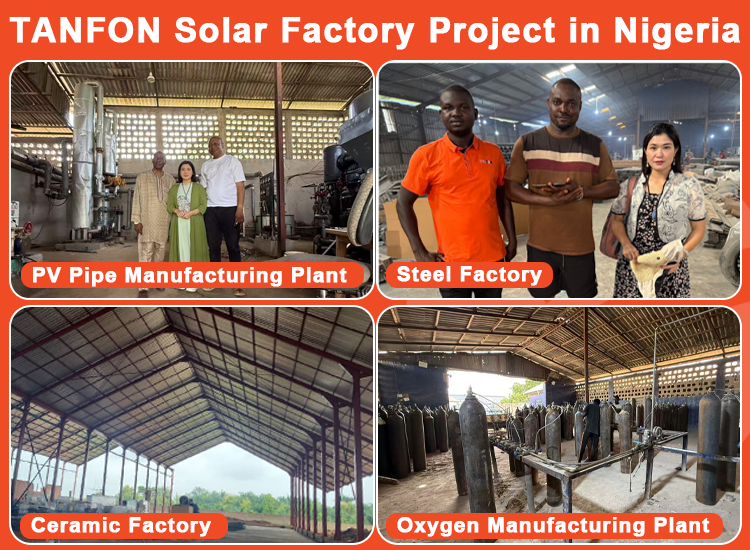
Tanfon has extensive experience serving solar energy projects across Africa, including Nigeria, the Democratic Republic of the Congo, Chad, and Kenya. Its wider international project experience also supports customers with different energy requirements, from agricultural applications to commercial facilities and rural electrification.
This experience is particularly relevant to farms and EPC contractors working in remote or challenging environments. Each project requires its own technical assessment, but experience across different markets helps the engineering team identify practical considerations early in the planning process.
What Africa-Focused Project Experience Means for Farm Owners
Understanding local power conditions
In areas where grid supply is unreliable or diesel generation is expensive, system designers need to consider how solar generation, battery storage, and backup sources can work together. The configuration should reflect the farm's actual operating priorities rather than assume that one standard system will fit every location.
Planning for remote-site logistics
Some agricultural projects are located far from major cities or established service centres. Equipment transportation, site access, installation schedules, and the availability of qualified technicians should be considered before project delivery.
Designing for the local environment
Dust, high ambient temperatures, seasonal rainfall, humidity, and other environmental factors can affect equipment selection and maintenance planning. Appropriate enclosure protection, cable selection, mounting structures, ventilation, and surge protection help address site-specific risks.
Providing project-specific engineering
Farms differ in crop type, irrigation methods, water demand, pump head, operating hours, and additional electrical loads. A detailed load assessment and hydraulic evaluation help determine the correct system configuration.
Considering operation and maintenance from the start
A solar system should be designed not only for installation but also for long-term operation. Monitoring access, maintenance procedures, technical documentation, and spare-parts planning can be particularly important for remote agricultural sites.
Tanfon's service information describes experience with African site surveys, project design, installation guidance, and follow-up support. These capabilities can help customers evaluate their requirements before committing to a system configuration.
For project-specific information, visit Tanfon's solar service page.
7. Environmental Durability and Equipment Protection
Agricultural solar equipment may be exposed to dust, heat, humidity, rain, corrosive substances, and electrical disturbances. Appropriate equipment selection and installation practices are therefore important for reliable long-term operation.
When evaluating a solar pumping or farm power system, check the following:
- PV module and inverter specifications for the intended operating environment
- Appropriate enclosure protection ratings for outdoor control equipment
- UV-resistant cables and correctly rated electrical connectors
- Suitable mounting structures, foundations, and corrosion protection
- Grounding, surge protection, and lightning protection where required
- Dry-run protection and other pump safeguards where supported by the system
- Accessible isolation and maintenance points
- Manufacturer instructions, warranties, and recommended inspection intervals
Dry-run protection is particularly useful for groundwater pumping applications. If a pump operates without sufficient water, it may overheat or suffer damage. A suitable protection system can stop the pump when the relevant sensor or controller detects an unsafe condition.
However, the effectiveness of these protections depends on correct selection, installation, and configuration. Equipment ratings and safety functions should always be verified against the manufacturer's documentation and applicable local standards.
8. How to Reduce the Total Cost of Farm Solar Power
The lowest initial equipment price does not always produce the lowest long-term operating cost. Agricultural buyers should evaluate the complete system, including installation, maintenance, fuel use, and the cost of any storage or backup equipment.
Several measures can help improve project economics:
Match the pump to the hydraulic requirement. An oversized pump may increase equipment and energy costs without delivering a meaningful operational benefit.
Schedule pumping around solar availability. Where the crop and water-storage arrangements allow it, operating pumps during productive solar hours can reduce the need for battery storage.
Use water storage strategically. Tanks and reservoirs may provide a cost-effective buffer for irrigation, particularly when water can be delivered by gravity.
Prioritize essential loads. For a larger farm power system, identifying critical equipment can help determine the appropriate inverter and battery capacities.
Plan for maintenance. Accessible equipment, suitable protection, monitoring, and a clear maintenance schedule can help reduce avoidable downtime.
Compare the full lifecycle cost. Consider system price, installation, expected energy production, diesel consumption, battery replacement where applicable, and ongoing service requirements.
The payback period should be calculated using realistic assumptions about local fuel and electricity prices, actual energy consumption, solar production, and maintenance costs. Results will vary from one farm to another.
9. What Information Is Needed for a Customized Farm Solar Solution?
Before requesting a quotation, farm owners, agricultural businesses, and EPC contractors should prepare the following information where available:
- Project country and installation location
- A list of pumps and other electrical equipment
- Pump rated power, required flow rate, and total dynamic head
- Daily water demand and irrigation schedule
- Daily energy consumption and machine operating hours
- Available grid electricity and diesel generator information
- Required backup duration and critical loads
- Available space for PV modules, tanks, or reservoirs
- Site conditions, access constraints, and installation requirements
With these details, an engineering team can assess the appropriate PV capacity, pump control method, inverter rating, battery requirements, and backup configuration.
For a commercial farm, the assessment should also consider future expansion, such as additional irrigation zones, cold storage, processing machinery, or farm buildings.
Conclusion: Is Solar Power a Practical Choice for Agricultural Water Pumps?
Yes. Solar energy can power agricultural water pumps and help farms reduce dependence on grid electricity and diesel generators. The best solution depends on the pump's hydraulic requirements, the farm's daily water demand, solar availability, and whether electricity is needed beyond daylight hours.
For irrigation that can be scheduled during the day, direct solar pumping and water storage may reduce the need for batteries. For farms that need electricity for multiple loads or require greater operational flexibility, a 50kW off-grid solar power system or a 50kW hybrid solar energy system may be worth evaluating, provided the capacity matches the actual load profile.
Tanfon's 50kW off-grid farm solar project in Gambia provides a real example of solar energy being applied to agricultural operations in Africa. With extensive experience serving projects in Nigeria, the Democratic Republic of the Congo, Chad, Kenya, and other markets, Tanfon understands the importance of combining appropriate system design with practical installation and support planning.
Contact Tanfon to discuss your farm's energy requirements and request a customized solar solution.
Table of Contents
- Can Solar Power Water Pumps in Agriculture? A Practical Guide
- 1. How Do Solar-Powered Water Pumps Work?
- 2. Can Solar Water Pumps Operate Without Battery Storage?
- 3. Designing an Off Grid Solar Power System 50kW for a Farm
- 4. When Is a Solar Energy System Hybrid 50kW a Better Choice?
- 5. Real Project Experience: Tanfon's 50kW Off-Grid Solar Power System for a Farm in Gambia
- 6. Extensive Experience in Africa: Why Local Project Knowledge Matters
- 7. Environmental Durability and Equipment Protection
- 8. How to Reduce the Total Cost of Farm Solar Power
- 9. What Information Is Needed for a Customized Farm Solar Solution?
- Conclusion: Is Solar Power a Practical Choice for Agricultural Water Pumps?
