
 EN
A commercial solar system is a long-term investment. Whether it powers a factory, hotel, warehouse, cold-storage facility, or agricultural operation, its value depends not only on how much electricity it generates on the day of commissioning, but also on how reliably it performs over the years.
However, maintaining a commercial solar system involves much more than cleaning solar panels. Performance can gradually decline because of loose electrical connections, inverter alarms, partial shading, battery degradation, dust accumulation, or changes in operating conditions. Some problems are visible, while others can remain unnoticed until they begin to affect energy production or business operations.
For commercial and industrial users, even a small performance issue can have wider consequences. A factory may experience production interruptions, a hotel may rely more heavily on diesel generators, and a cold-storage facility may face operational risks if its backup power system does not respond as expected.
The key to effective maintenance is to identify early warning signs, understand system performance data, and establish a clear process for inspection, diagnosis, and corrective action.
In this guide, we explain five important aspects of commercial solar system maintenance, including practical maintenance methods, factory quality control, and lessons from Tanfon's commercial solar projects in Africa.
1. Recognize Early Warning Signs Before They Become Major Problems
One of the most common maintenance mistakes is waiting until a solar system stops working before taking action.
A commercial solar system may continue generating electricity even when one part of the installation is underperforming. For example, one PV string may produce less power than neighboring strings, or an electrical connector may gradually deteriorate. The system may still appear operational, but its energy output may already be below expectations.
These problems are not always easy to identify through a visual inspection.
Common early warning signs include:
- Unexpected drops in PV generation: Actual energy production falls below the expected level under comparable weather conditions.
- Repeated inverter alarms: Warning messages or fault codes appear more frequently than usual.
- Uneven string performance: One PV string consistently generates less electricity than other strings exposed to similar conditions.
- Abnormal battery behavior: The battery charges or discharges unexpectedly, or its state of charge changes differently from normal operating patterns.
- Unusual temperature readings: Certain connectors, cables, or electrical components show abnormal heating.
- Frequent generator operation: A hybrid system relies on its backup generator more often than expected.
Not every performance deviation indicates a serious fault. Weather changes, seasonal sunlight variation, temporary shading, and differences in operating loads can all influence system output.
The important step is to compare performance under similar conditions and investigate deviations that persist over time.
For example, if one PV string consistently underperforms compared with other strings in the same array, possible causes may include shading, damaged modules, loose connections, blown fuses, or wiring problems.
Addressing these issues early can help prevent unnecessary energy losses and reduce the risk of more serious equipment problems.
Practical maintenance tip: Establish normal operating benchmarks after system commissioning. Keep records of PV generation, inverter output, battery status, and load consumption so that future changes can be identified more easily.
2. Use Monitoring Data to Identify Performance Issues Early
Visual inspections are important, but they cannot reveal every problem inside a commercial solar installation.
A monitoring platform provides a more complete picture by tracking how the system performs over time. Instead of relying on a single day's reading, maintenance personnel can compare actual operating data with historical performance and identify unusual changes.
For commercial solar systems, useful monitoring parameters include:
- Daily and monthly solar energy generation
- PV string voltage and current, where supported
- Inverter output power and operating status
- Battery state of charge (SOC)
- Battery charging and discharging power
- Grid electricity consumption
- Diesel generator operating status
- Load consumption
- System alarms and fault records
Why Historical Performance Matters
A system's own operating history is often more useful than a single performance figure.
For example, if a factory's solar generation suddenly decreases compared with previous weeks, the maintenance team should investigate whether the change is related to weather conditions, dust accumulation, partial shading, equipment faults, or changes in the system configuration.
A practical monitoring process usually involves three steps:
Step 1: Detect the deviation.
Identify unusual changes in generation, voltage, current, battery behavior, or inverter status.
Step 2: Diagnose the possible cause.
Review alarm records and operating data. If necessary, arrange a technical inspection to check PV modules, connectors, cables, protection devices, or inverter settings.
Step 3: Verify the corrective action.
After the issue has been addressed, compare the new operating data with the previous baseline to confirm whether system performance has improved.
This creates a closed-loop maintenance process: monitoring, diagnosis, corrective action, and verification.
Combine Remote Monitoring with On-Site Inspection
Remote monitoring can help technical teams identify problems without immediately traveling to the project site. However, it cannot replace physical inspection.
For example, monitoring data may indicate that one PV string is producing less electricity than expected, but an on-site inspection may still be necessary to determine whether the cause is a damaged connector, shading, a fuse issue, or a module defect.
For larger commercial solar systems, a combination of remote diagnostics and scheduled on-site inspections is often more effective than relying on either method alone.
Practical maintenance tip: Assign responsibility for monitoring alerts. An alarm has little value if nobody reviews it or takes action. Define who receives notifications, how faults are prioritized, and when an on-site inspection is required.
3. Maintain Power Reliability, Not Just Solar Energy Generation
Many maintenance plans focus mainly on maximizing solar power generation. However, for businesses that depend on a continuous electricity supply, system availability is equally important.
A commercial solar system supporting a production line, cold-storage facility, telecommunications site, or hotel is part of the site's wider electrical infrastructure.
In these applications, maintenance must consider how solar generation interacts with other power sources, including the utility grid, battery storage, diesel generators, and uninterruptible power supply (UPS) systems.
Check the Entire Hybrid Power Architecture
A hybrid solar system is designed to coordinate multiple energy sources. Its reliability therefore depends on more than the condition of the solar panels and inverter.
Maintenance personnel should periodically verify:
- Whether the inverter's operating modes are configured correctly
- Whether the battery management system (BMS) communicates properly with the inverter
- Whether charging and discharging limits match battery requirements
- Whether the generator start/stop control works as intended
- Whether automatic transfer and switching functions operate correctly
- Whether critical loads remain supported during power-source transitions
- Whether alarms reach the people responsible for responding
For example, a factory may use solar power as its primary daytime energy source, battery storage to support loads during grid interruptions, and a diesel generator as additional backup.
If the generator control logic is not configured correctly, the generator may start too frequently or fail to start when needed. Similarly, an incorrect battery operating strategy may reduce the available backup energy.
These issues may not be visible through solar generation data alone.
Pay Attention to Battery Health
Battery maintenance is particularly important in commercial hybrid systems.
For lithium battery systems, operators should monitor:
- State of charge (SOC)
- Battery temperature
- Charge and discharge current
- Cell voltage differences, where available
- Battery management system alarms
- Communication status
- Charge and discharge history
The battery's depth of discharge (DoD), operating temperature, charging conditions, and cycling frequency all influence its long-term performance.
If battery temperatures repeatedly exceed the manufacturer's recommended operating range, the system should be inspected. Proper ventilation, thermal management, and suitable installation conditions are essential for maintaining battery performance and safety.
Consider the Business Impact of Downtime
The maintenance strategy should reflect the role of the solar system in the business.
For a facility using solar mainly to reduce daytime electricity consumption, a temporary reduction in PV generation may result in higher grid consumption.
For a factory relying on a hybrid solar system to support critical production equipment, the same problem may have a much greater operational impact.
This is why solar maintenance should be linked to the facility's critical loads, backup requirements, and operating priorities—not just the number of kilowatt-hours generated.
Practical maintenance tip: Identify critical and non-critical loads during system design. Test the relevant backup and switching functions according to the manufacturer's recommendations and the site's maintenance plan.
4. Reliable Maintenance Starts with Manufacturing Quality
Commercial solar system maintenance does not begin only after installation. It starts much earlier, during product selection, manufacturing, inspection, and system integration.
Poorly manufactured components or undetected defects can create maintenance problems after equipment reaches the project site. This is why buyers should evaluate a supplier's quality-control processes as well as its product specifications.
Understand the Role of International Standards
International standards provide important references for evaluating solar equipment.
Some relevant standards include:
- IEC 61215: Covers design qualification and type approval testing for terrestrial photovoltaic modules. It evaluates module performance under defined test conditions, but does not provide a precise prediction of actual service life.
- IEC 61730: Addresses photovoltaic module safety, including construction and testing requirements intended to reduce electrical, fire, and mechanical safety risks.
- IEC 62109: Covers safety requirements for power conversion equipment used in photovoltaic systems, including relevant inverter requirements.
- IEC 62619: Specifies safety requirements for secondary lithium cells and batteries used in industrial applications.
Buyers should always check the applicable standard, product model, certificate scope, and test documentation. A general statement that a product is "IEC certified" is not a substitute for reviewing the relevant documents.
Understand the Value of Factory Inspection
Different quality-control methods help identify different types of defects.
For example:
- Electroluminescence (EL) testing: Can reveal certain hidden PV cell defects, including micro-cracks and electrical discontinuities that may not be visible during a normal visual inspection.
- Visual inspection: Helps identify surface damage, incorrect assembly, loose components, and packaging issues.
- Electrical testing: Checks relevant voltage, current, insulation, and functional characteristics.
- Inverter functional testing: Verifies operating functions, protection responses, and relevant system parameters.
- Battery testing: Checks battery performance, communication, and protection functions according to the product design and test procedures.
These inspections help reduce the risk of defects reaching the installation site. However, no single factory test can guarantee that equipment will never experience problems during operation.
Why System Integration Is Equally Important
Even when individual components meet their respective quality requirements, the complete system still needs to be properly designed and tested.
For example, the inverter and battery must have compatible voltage ranges and communication protocols. The BMS protection settings must be coordinated with the inverter's charging and discharging parameters. The generator and grid interfaces must also be configured according to the site's electrical design.
For solar systems for industries, this level of integration is especially important because equipment faults can affect production schedules and business operations.
At TANFON, commercial and industrial solar solutions are designed around application requirements, site conditions, and customer load profiles. The company emphasizes manufacturing quality, system integration, and engineering support to help customers build reliable solar power solutions.
Its production management also incorporates German 5S methodology and quality-control procedures. Buyers can request relevant product certificates, inspection information, and available testing records when evaluating a project.
5. Make Solar Maintenance Part of Long-Term Asset Management
A commercial solar system is not a static installation. Its operating environment, energy demand, and equipment condition change over time.
Dust accumulation may increase after dry seasons. Vegetation may gradually create shading. Battery capacity changes with use and age. Electrical connections may require inspection, and inverter components may eventually need attention.
For this reason, maintenance should be planned throughout the system's operating life rather than treated as an occasional repair activity.
Build a Practical Maintenance Schedule
The exact maintenance frequency depends on the system design, equipment manufacturer's instructions, local climate, and site conditions. The following table provides a general framework that can be adapted to individual projects.
|
Maintenance Item |
Suggested Inspection Focus |
|
Monitoring data |
Review generation, load, battery status, and alarms regularly |
|
Solar panels |
Check for dust, dirt, shading, cracks, or visible damage |
|
Electrical connections |
Inspect cables, connectors, terminals, and signs of overheating |
|
Inverters |
Review alarms, ventilation, operating temperature, and performance |
|
Battery system |
Monitor SOC, temperature, BMS alarms, and operating history |
|
Mounting structures |
Check fasteners, corrosion, and structural condition |
|
Protection devices |
Verify relevant breakers, fuses, and protection functions |
|
Backup generator |
Check starting, transfer, and coordination functions |
|
System performance |
Compare actual operation with historical and expected performance |
In dusty regions, solar panel cleaning may be required more frequently. In coastal areas, corrosion inspections may deserve additional attention. In hot climates, ventilation and equipment temperature management become particularly important.
The maintenance plan should therefore reflect actual environmental conditions rather than follow a rigid schedule for every project.
Establish Clear Responsibility for Maintenance
A monitoring system is only useful when someone is responsible for responding to its alerts.
Before commissioning a commercial solar system, buyers should clarify:
- Who monitors the system after installation?
- Who receives and reviews fault notifications?
- How are technical issues diagnosed?
- When is an on-site inspection required?
- What is the expected response process?
- Which spare parts should be kept locally?
- What maintenance records should be retained?
A clear service arrangement helps prevent small problems from remaining unresolved for weeks.
6. What a Real Commercial Project in Africa Teaches Us About System Maintenance
Real project experience is important when evaluating the long-term operation of commercial solar systems. Different industries have different energy demands, and a solution designed for a factory must account for its specific operating environment.
One example is TANFON's 100kW hybrid solar system project for a brick factory in Uganda.
Brick manufacturing is an energy-intensive industrial activity. Depending on the production process, a factory may operate machinery, pumps, ventilation equipment, material-handling systems, and other electrical loads. Reliable electricity is important for keeping production activities running smoothly.
A 100kW hybrid solar system for this type of application needs to be evaluated as part of the factory's overall power infrastructure. Important engineering considerations include the factory's operating schedule, equipment load characteristics, solar generation conditions, backup requirements, and the coordination of available power sources.
From a maintenance perspective, this type of industrial application highlights several important points:
First, maintenance should reflect actual production loads. A factory's electricity demand may vary throughout the working day. Reviewing operating data helps identify whether the system is performing as expected under different production conditions.
Second, hybrid system functions need periodic verification. Where solar, battery storage, grid power, and generator backup are integrated, their control and communication functions should be checked according to the system design.
Third, monitoring helps identify performance changes. Reviewing inverter operation and energy generation data can help maintenance personnel detect unusual changes and investigate them before they become more serious.
Finally, local conditions matter. Dust, high temperatures, installation conditions, and the availability of technical support can all influence maintenance requirements in African industrial environments.
This project demonstrates the relevance of customized hybrid solar solutions for industrial applications in Africa. It also illustrates why system design, monitoring, and maintenance planning should be considered together from the beginning.
For the full project configuration and application details, please refer to the 100kW Hybrid Solar System for a Brick Factory in Uganda case study.
Why Africa Experience Matters
Commercial solar projects in Africa often involve practical challenges such as unstable grid supply, diesel generator dependence, high ambient temperatures, dust, and long distances between project sites.
A supplier with relevant regional experience is better positioned to understand these conditions and incorporate them into system design and service planning.
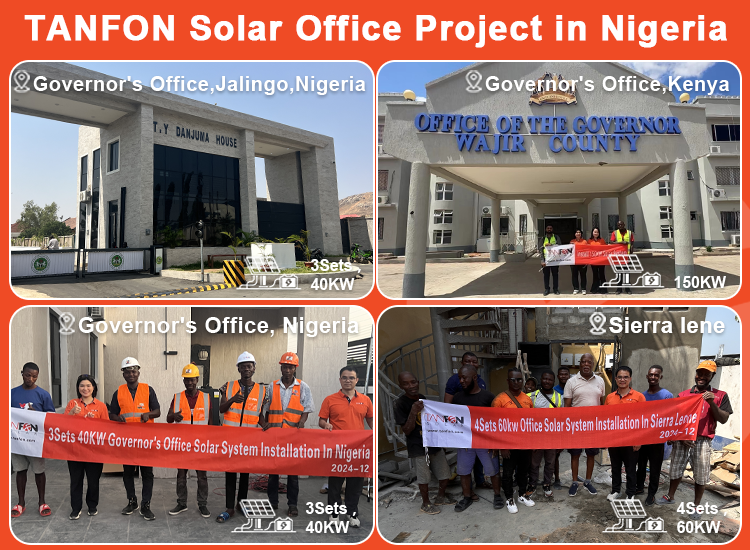
TANFON has extensive experience in Africa, with project experience across countries including Nigeria, Chad, Kenya, the Democratic Republic of the Congo, Tanzania, and other African markets.
The company has conducted site surveys at more than 1,200 locations and developed over 3,300 project proposals based on different customer requirements. Its African engineering network supports project surveys, technical consultation, installation assistance, and maintenance-related services.
This experience helps TANFON understand the practical needs of factories, hotels, farms, schools, hospitals, and other commercial facilities. More importantly, it supports a project-based approach: each system is evaluated according to its actual loads, local power conditions, and operating environment.
Frequently Asked Questions About Commercial Solar System Maintenance
1. How often should a commercial solar system be maintained?
The maintenance frequency depends on the system design, equipment manufacturer's recommendations, and local environmental conditions. Monitoring data should be reviewed regularly, while physical inspections should follow a planned schedule. Solar panels may need more frequent cleaning in dusty environments.
2. What are the common signs that a commercial solar system needs maintenance?
Common warning signs include reduced energy generation, repeated inverter alarms, uneven PV string output, abnormal battery behavior, overheating connectors, and unexpected increases in generator operation. Persistent changes should be investigated rather than ignored.
3. Can remote monitoring replace on-site solar system maintenance?
No. Remote monitoring helps identify performance changes and diagnose certain problems, but it cannot replace physical inspections. Electrical connections, mounting structures, cables, ventilation, and other components still require appropriate on-site checks.
4. Why is battery monitoring important in a commercial hybrid solar system?
Battery monitoring helps operators track state of charge, temperature, charging and discharging behavior, and BMS alarms. These parameters provide useful information about battery operation and can help identify abnormal conditions before they affect system performance.
5. Why is solar system maintenance especially important for factories in Africa?
Factories in many African markets may experience unstable grid supply, high temperatures, dust, and reliance on diesel generators. Regular maintenance helps ensure that the solar system, battery storage, grid connection, and generator backup continue to work together according to the intended design.
6. What should I look for in a commercial solar system maintenance provider?
Look for a supplier with relevant project experience, qualified technical personnel, remote monitoring capabilities, clear troubleshooting procedures, documented warranty terms, and a practical plan for on-site support. Experience in the project region is also important because local operating conditions can influence system maintenance requirements.
Conclusion: Good Maintenance Protects the Long-Term Value of Your Solar Investment
Maintaining a commercial solar system is not simply about cleaning panels or repairing equipment after a failure. It is a continuous process that combines performance monitoring, early fault detection, electrical inspection, battery management, system testing, and responsive technical support.
For businesses investing in solar systems for industries, a well-planned maintenance strategy can help reduce avoidable energy losses, improve system reliability, and protect long-term investment value.
With extensive experience in Africa and practical knowledge of commercial and industrial applications, TANFON provides customized solar energy solutions supported by engineering consultation, system integration, monitoring, and technical service.
If you are planning a solar project for a factory, hotel, warehouse, or other commercial facility, share your electricity consumption, load information, and backup requirements with the TANFON team.
We can help assess your application and develop a suitable solar energy solution based on your site's actual operating conditions.
TANFON Solar – Reliable Solar Energy Solutions for Commercial and Industrial Applications.
Table of Contents
- 1. Recognize Early Warning Signs Before They Become Major Problems
- 2. Use Monitoring Data to Identify Performance Issues Early
- 3. Maintain Power Reliability, Not Just Solar Energy Generation
- 4. Reliable Maintenance Starts with Manufacturing Quality
- 5. Make Solar Maintenance Part of Long-Term Asset Management
- 6. What a Real Commercial Project in Africa Teaches Us About System Maintenance
-
Frequently Asked Questions About Commercial Solar System Maintenance
- 1. How often should a commercial solar system be maintained?
- 2. What are the common signs that a commercial solar system needs maintenance?
- 3. Can remote monitoring replace on-site solar system maintenance?
- 4. Why is battery monitoring important in a commercial hybrid solar system?
- 5. Why is solar system maintenance especially important for factories in Africa?
- 6. What should I look for in a commercial solar system maintenance provider?
- Conclusion: Good Maintenance Protects the Long-Term Value of Your Solar Investment
