
 EN
EN
Start with the Numbers That Matter Most
One of the most common questions hotel owners ask is: How large should a hotel solar system be? The answer depends entirely on the property's energy profile, operating schedule, and future expansion plans.
After delivering hotel projects across Africa, Asia, and the Pacific, we've found that system sizing should always begin with a comprehensive load analysis rather than a rough estimate.
As a general reference, a hotel with 20–40 guest rooms, where every room is equipped with air conditioning, typically requires 50–60 kVA of inverter capacity. However, once air conditioning becomes standard throughout the property, demand for inverter capacity, battery storage, and photovoltaic generation increases significantly. Every project should therefore be designed around actual electrical consumption rather than assumptions.
Larger hotels naturally require greater generating capacity. A 100-room hotel generally requires 200–250 kWp of solar capacity, while resorts operating chillers, swimming pools, commercial kitchens, and laundry facilities often require 500–900 kWp. In most hotels, HVAC systems account for 50%–70% of total electricity consumption, making solar particularly effective because peak cooling demand closely aligns with peak solar production during the middle of the day.
The First Step: A Comprehensive Load Audit
Every successful hotel solar project begins with a detailed electrical load audit.
Our engineering team works closely with hotel electricians to evaluate every major electrical load, including lighting, air-conditioning systems, refrigeration equipment, kitchens, laundry facilities, elevators, water pumps, and guest room circuits. Beyond measuring current electricity consumption, we also assess future expansion plans to ensure the system can support additional capacity without major redesign.
Daily operating patterns are equally important. Hotel energy consumption changes dramatically throughout the day. Daytime demand is driven by housekeeping operations, restaurants, kitchens, and laundry services, while nighttime consumption is dominated by guest room air conditioning, lighting, security systems, and other essential services.
Understanding these operating profiles allows engineers to size battery storage accurately. Designing solely around short-duration peak demand often results in oversized systems and unnecessary capital expenditure.
Solar Panel Sizing Is More Than Counting Panels
Once the electrical demand has been established, the photovoltaic array can be sized appropriately.
This process involves far more than dividing daily electricity consumption by the rated output of individual solar panels. Engineers must evaluate local solar irradiance, Peak Sun Hours (PSH), available roof space, structural conditions, panel orientation, shading, and seasonal weather patterns.
Across much of East Africa, average Peak Sun Hours range from 4 to 7 hours per day. A hotel in Nairobi, for example, may receive approximately five PSH, while properties located in desert regions can receive seven or more.
Seasonal variation also influences system design. During the rainy season, solar generation decreases, although hotel occupancy may also decline. Conversely, the dry season often combines stronger solar production with peak occupancy. To compensate for seasonal irradiance variation, long-term module degradation, and future load growth, we typically recommend oversizing the PV array by approximately 20%.
Considering that photovoltaic modules lose approximately 0.5%–1% of output per year, this additional capacity helps maintain long-term system performance throughout the project's lifecycle.
Battery Storage: The Foundation of Reliable Hotel Power
Battery energy storage is what transforms a conventional solar installation into a dependable hotel power solution.
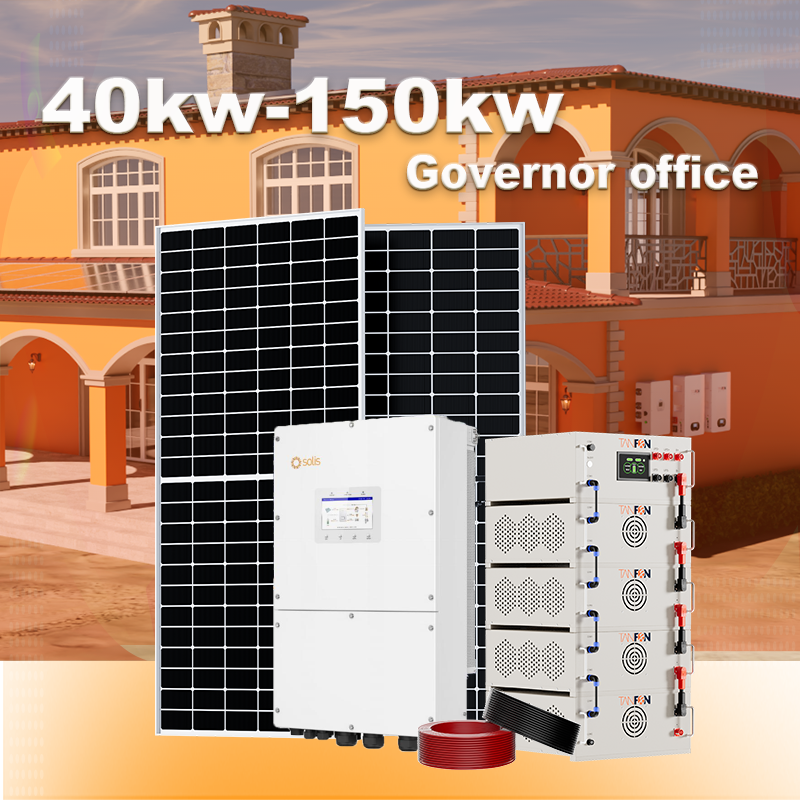
A practical example is our 150kW solar power system with 500kWh battery storage, designed for a hotel project in the Seychelles. The solar energy system 500kWh configuration provides sufficient stored energy to supply the hotel overnight while maintaining reserve capacity during periods of reduced solar generation.
Battery capacity is only part of the equation. Battery chemistry has an equally significant impact on safety, reliability, and lifecycle cost.
For commercial hotel applications, we recommend LiFePO₄ battery technology combined with MPPT charge controllers and hybrid energy storage inverters. This combination offers excellent thermal stability, long cycle life, deep discharge capability, and a substantially lower risk of thermal runaway compared with other lithium battery chemistries.
For hotels, battery safety is not simply a technical specification—it is an operational necessity where guest safety and uninterrupted business operations are paramount.
A Real-World System Sizing Example
A recent project in Nigeria demonstrates how these engineering principles are applied in practice.
The hotel required reliable power for guest room air conditioning, commercial kitchens, and other critical services. Following a comprehensive load audit, we determined that the property's average daily electricity consumption was approximately 1,000 kWh.
Based on an average of five Peak Sun Hours, the calculated photovoltaic requirement was approximately 200 kW. To improve performance during cloudy weather, accommodate future expansion, and offset long-term module degradation, the final design incorporated a 250kW solar power system.
The Battery Energy Storage System (BESS) was sized at 500 kWh, providing approximately 12 hours of backup power under typical operating conditions. The hybrid system integrates MPPT technology with an advanced energy storage inverter capable of charging from solar, the utility grid, or a diesel generator within approximately two hours. Intelligent generator control automatically starts and stops the generator according to battery state of charge and real-time load demand, significantly reducing diesel consumption.
Today, the hotel operates primarily on solar energy during daylight hours and stored battery power overnight. Diesel generation is required only during prolonged periods of poor weather or unusually high demand. As a result, electricity costs have been reduced by more than 60%, while power reliability and guest satisfaction have improved substantially.
This project illustrates that successful system sizing is not about installing the largest possible system—it's about designing the right system for the hotel's actual operating requirements.
